

June beetle
- noun
- /dʒuːn ˈbiːtəl/
- US
- The larvae of June beetles can damage the roots of grass, making them a pest for gardeners.
Examples
-
In addition to ant lions, remarkably furry sand roaches and June beetles inhabit the Florida scrub.
Academic text (1993) -
In late spring, June beetles emerge from the ground, signaling the start of the warmer months.
-
During a warm evening, I noticed June beetles flying around the porch light, attracted to the brightness.
Synonyms

 1
5.8
1
5.8

A large brown beetle seen in late spring that often flies to lights
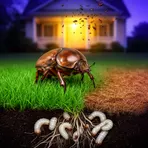
A large beetle that appears in late spring whose larvae eat plant roots and can damage lawns

A large brown beetle that appears in late spring and whose young eat plant roots
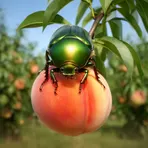
A large shiny green beetle often seen on ripening fruit in early summer

A brown beetle like a May bug that often damages plants
Surface Forms
Morphology
The meaning — a beetle associated with the month of June/late spring — is directly and transparently derivable from combining 'June' (the month) with 'beetle' (an insect). This simple noun+noun composition is predictable and cross-linguistically common, so a B1 learner who knows both words will readily infer the MWE's basic meaning.
Etymology
The name June beetle comes from the simple image of a big, brown beetle that appears in June, often clumsy around porch lights. Because these insects are most common in late spring and their larvae eat grass roots, the name came to mean 'a large beetle people see in early summer'.