

May bug
- noun
- /meɪ bʌg/
- UK
- The larvae of the May bug can damage lawns by feeding on grass roots.
Examples
-
A single May bug flew into the room through the open window.
-
Look at that huge May bug on the porch!
-
Every spring, May bugs swarm around the garden lights in the evening.
-
The May bugs are out in full force this year.
-
In the garden, we noticed several May bugs crawling on the flowers, attracting the attention of curious children.
-
The farmer struggled to protect his crops from the May bugs, which had begun to appear in large numbers this spring.
-
After the heavy rain, the yard was filled with May bugs, leaving behind a trail of damage to the young plants.
Synonyms

 1
5.8
1
5.8

A large brown beetle seen in late spring that often flies to lights
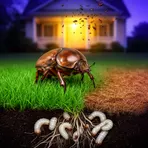
A large beetle that appears in late spring whose larvae eat plant roots and can damage lawns
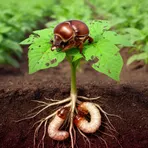
A large brown beetle that eats plant leaves and whose young eat roots
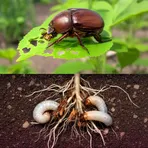
A large brown beetle whose adults eat leaves and larvae eat roots

A group of beetles like June bugs that often eat plant leaves

A brown beetle like a May bug that often damages plants

A beetle whose young eat plant roots and can damage lawns
Surface Forms
Morphology
The meaning is directly compositional: 'May' (the month) + 'bug' (an insect) signals an insect associated with May. This month+animal naming pattern is cross-linguistically common, so a B1 learner who knows both words will readily infer it refers to an insect that appears in May (even if they may not know the exact species or biological details).
Etymology
May bug gets its name because the large beetle is often seen in May and the word bug simply means an insect. It flies at night in late spring and its young live in the soil and eat plant roots, so the name reminds us this large spring insect can harm plants.