

May beetle
- noun
- UK
- The May beetle is often seen in gardens.
Examples
-
The larvae of the May beetle can cause significant damage to lawns by feeding on the roots.
-
Have you ever spotted a May beetle before?
-
Children used to collect May beetles in jars during the late spring evenings.
-
Every spring, May beetles swarm around the porch lights in our neighborhood.
-
In late spring, I noticed a shiny May beetle crawling on my garden flowers.
-
The larvae of the May beetle can damage the roots of plants in your yard.
-
We saw several May beetles flying around the porch light on warm evenings.
Synonyms

 1
5.8
1
5.8

A large brown beetle seen in late spring that often flies to lights

A large brown beetle that appears in late spring and whose young eat plant roots

A large brown beetle that appears in late spring and whose larvae eat grass roots

A brown beetle like a May bug that often damages plants

A group of beetles like May beetles or chafers

A group of beetles like June bugs that often eat plant leaves

A large brown beetle that eats plant leaves and whose young eat roots
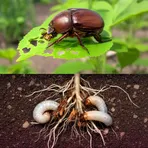
A large brown beetle whose adults eat leaves and larvae eat roots

A beetle whose young eat plant roots and can damage lawns
Surface Forms
Morphology
The meaning 'a beetle associated with the month of May' is directly and transparently derived from combining 'May' (the month) with 'beetle' (an insect); a B1 learner who knows both words can infer this referent. This noun compound follows a common, compositional naming pattern (month + animal) found across languages, so its sense is immediately comprehensible from the constituents.
Etymology
May beetle gets its name from when people saw it: the big brown beetles often appear in the month of May, flying around porch lights on warm spring evenings. Because of this, the name now means 'a large spring beetle whose young eat plant roots and can damage lawns'.