

to leg it
 1
9.0
1
9.0

- phrasal verb
- /lɛɡ ɪt/
- UK
- I realized I was late for my meeting, so I decided to leg it to the bus stop.
Loading YouTube…
Watch on YouTubeSo I said to Mark right, we're going to drop him and we're going to leg it in into the woods.
- So I said to Mark right, we're going to drop him and we're going to leg it in into the woods.
- So I say the mark right, we're going to drop him and we're going to leg it in into the woods.
Examples
-
When the fire alarm went off, everyone had to leg it out of the building quickly.
-
And then we'll leg it and just go mental in London.
-
Well, we got to leg it into town and get you something to eat fast.
-
So I said to Mark right, we're going to drop him and we're going to leg it in into the woods.
-
We wait for an opening, and then we leg it to The Beast.
-
I usually get the bus, but if I'm late, I have to leg it if I miss the bus.
-
Trapped, the robbers drop the lot and they leg it.
-
Hearing the roof creak above them, the investigators took the opportunity to leg it as best they could.
Blog text (27) -
They leg it outside to see that the big all-terrain vehicle has already gone.
Blog text (24) -
We legged it from the ruined village under a blanket of smoke and dimming stars.
Fiction book (1997)
Synonyms
 ∞
1.0
∞
1.0
To move a boat fast in the same direction as the wind
 512
6.7
512
6.7
To hurry so you do something faster, often to avoid being late
 331
2.4
331
2.4
To run away from a place because it is dangerous
 260
3.7
260
3.7
To leave a place or person suddenly, often without saying goodbye
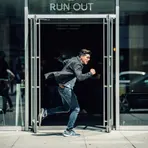 78
2.0
78
2.0
Leave a place suddenly, often to avoid someone or something
 69
2.3
69
2.3
To run away suddenly to escape danger
 54
3.1
54
3.1
To move quickly with short, hurried steps because you feel afraid or rushed
 51
3.5
51
3.5
Have to leave immediately or very soon
 36
5.3
36
5.3
To try to escape quickly, often by running
 31
5.5
31
5.5
To move quickly with short hurried steps, often to hide or escape
 29
2.8
29
2.8
Move a short distance quickly, often to make room or hurry
 18
8.3
18
8.3
To leave a place very quickly to escape danger or trouble
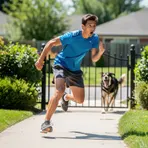 16
8.4
16
8.4
To leave a place quickly to avoid trouble or danger
 14
9.3
14
9.3
To run away quickly because you are afraid
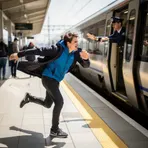 9
6.5
9
6.5
To hurry when someone tells you to
 8
7.9
8
7.9
To walk quickly, often for a long distance
 7
5.6
7
5.6
To leave a place quickly to escape danger or trouble
 5
7.2
5
7.2
Leave quickly to go somewhere or to avoid trouble
 3
2.4
3
2.4
To go quickly around a town to do errands
 3
1.7
3
1.7
To suddenly start running, often after walking or standing still
 2
2.5
2
2.5
Leave a place quickly because you are in a hurry
 2
9.0
2
9.0
To leave quickly to escape or avoid something
 2
3.4
2
3.4
Run quickly toward a place or thing to reach it first
 1
7.7
1
7.7
To move quickly on foot
 1
4.8
1
4.8
To go quickly in small, fast steps to a place
 1
3.8
1
3.8
Walk quickly for a short distance to a nearby place
 1
2.7
1
2.7
To move quickly in one direction


 1
6.1
1
6.1
Run away quickly to escape danger or trouble
 1
7.1
1
7.1
Move away quickly to avoid something you are afraid of
 1
7.2
1
7.2
To run or move very quickly without control

To run away quickly, usually because you are afraid

To move very fast on foot to get somewhere quickly

Move very fast along a street or path

To walk quickly for exercise, faster than a normal walk

To hurry to do something so you do not miss a good chance

To go somewhere quickly because you must hurry

To run away quickly to avoid being caught
Antonyms

How Fast

Surface Forms
Morphology
leg + it
The sense 'to run or move quickly' is partly inferable from 'leg' (legs are used for running), but the construction is an informal, lexicalized British idiom where 'it' adds no compositional meaning and the noun-to-verb usage is non‑standard. Because the form and exact usage are idiomatic and require exposure to register and syntax, a B1 learner who only knows the constituents would likely not fully predict the meaning.
Etymology
The phrasal verb leg it comes from the simple image of using your legs to move fast and get away. That's why to 'leg it' now means 'to run quickly' or 'to escape'.