
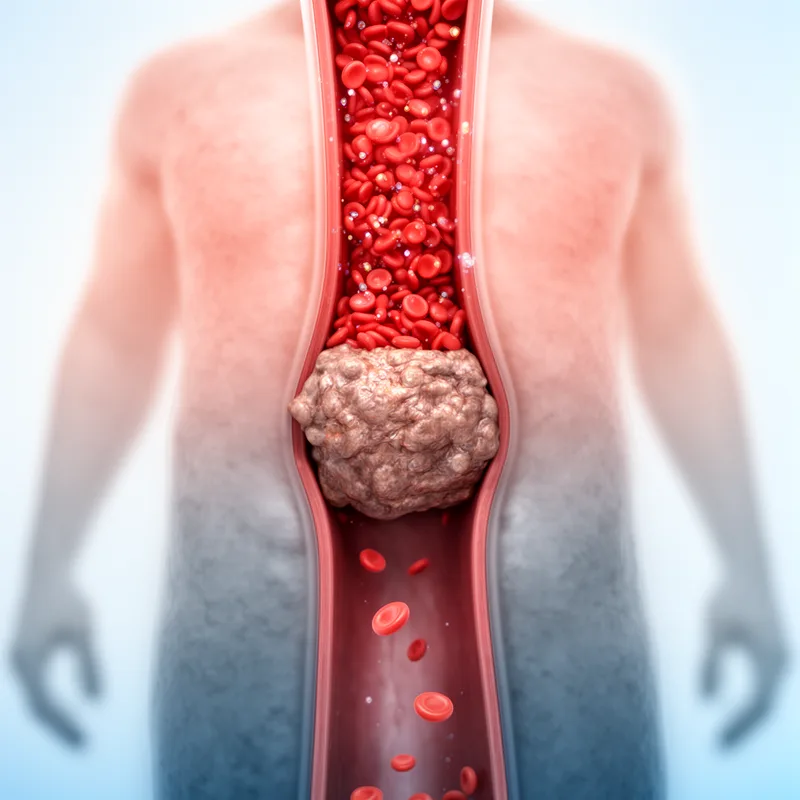
ischemic anoxia
- noun
- /ɪsˈkiːmɪk əˈnɒksɪə/
- Specialized
- After a heart attack, patients may experience ischemic anoxia in certain tissues due to impaired blood flow.
Examples
-
Doctors monitor patients with congestive heart failure closely for signs of ischemic anoxia.
-
The patient suffered from ischemic anoxia during the surgery.
-
Ischemic anoxia can lead to cell death if not promptly addressed by restoring circulation.
-
Is ischemic anoxia a common condition in heart failure?
-
Following his heart surgery, the doctor explained that ischemic anoxia could occur if blood circulation didn't improve.
-
Patients recovering from a heart attack are at risk of ischemic anoxia in tissues that received inadequate blood supply.
-
Clinicians are trained to recognize the symptoms of ischemic anoxia to prevent serious complications in patients with heart issues.
Synonyms

 9
7.9
9
7.9

Not enough oxygen reaches parts of the body, for example the brain
 4
9.3
4
9.3
Complete lack of oxygen in the body that can quickly damage the brain
Lack of oxygen in parts of the body because blood moves very slowly, often in heart failure

A lack of oxygen in body parts because not enough blood reaches them

When blood moves too slowly, parts of the body do not get enough oxygen
Antonyms

How Oxygenated

Surface Forms
Morphology
This is a regular adjective + noun composition: 'ischemic' (lack of blood supply) modifies 'anoxia' (lack of oxygen), so the combined meaning — oxygen deficiency caused by restricted blood flow — is directly derivable from the parts. The semantic relation is literal and compositional, following common medical naming patterns, so a learner who knows the constituent meanings will understand it.
Etymology
Ischemic anoxia joins ischemic, meaning 'reduced blood flow', and anoxia, meaning 'no oxygen'. Imagine a town whose river is blocked: without blood the body's tissues can't get oxygen, so the term means 'oxygen loss in tissue because blood flow is blocked'.