
hominid
 12
7.6
12
7.6

- noun
- /ˈhɒmɪnɪd/
- Specialized
- Within the Rift Valley itself, almost all the fossils are of hominids who died on lakesides, riversides, or wetlands.
- early hominids
- bipedal hominids
- fossil hominids
Loading YouTube…
Watch on YouTubeIt's also all of the the hominids that that led up to us, right?
- It's also all of the the hominids that that led up to us, right?
- Like what was the magic leap to Homo sapiens from the other hominids?
- We call them hominids, like Homo, Homo, floroensters, Homo, Neanderthals, etcetera, etcetera.
- But even in anthropology, just mainstream anthropology, we are told that our pre homo sapien sapien ancestors were non linguistic hominids.
Examples
-
Take Lucy, for example, the 3.5 million-year-old female hominid discovered in Ethiopia by Donald Johanson in 1974.
Academic text (1992) -
Many scientists believe that early hominids used basic tools for hunting and foraging.
-
So there was a hominid living in Europe and Asia before our species existed.
-
Why did early hominids begin to walk on two feet?
Academic text (2003) -
Chinese scientists said it belonged to an early hominid, while Western scientists said it looked more apelike.
Academic text (2006) -
But we were not the first hominids to use tools or to spread across the continents.
Academic text (1999) -
Using tools to obtain and prepare food was an important innovation for hominids and indicated increased brain size and function.
Academic text (1994) -
Yes, in retrospect, bipedalism opened up a huge range of radical new possibilities for hominids.
Academic text (2003) -
Surely those footprints are as important as those left by hominids at Laetoli, Tanzania, in the story of human development.
Academic text (2004) -
However, as Mithen (1996) suggested, even the earliest hominids must have been flexible in exploiting food resources.
Academic text (2002)
How Apelike
118
1.0

- Archaic
- Specialized

 1
7.7
1
7.7
- Specialized
12
7.6
- Specialized
2
4.0
Surface Forms
Morphology
hominid = human (opaque) = homin + id
The base idea relates to 'human' but the form 'homin-' is a Latin combining form and '-id' is a technical biological suffix, so the term is technical and not readily deducible by an average learner.
Etymology
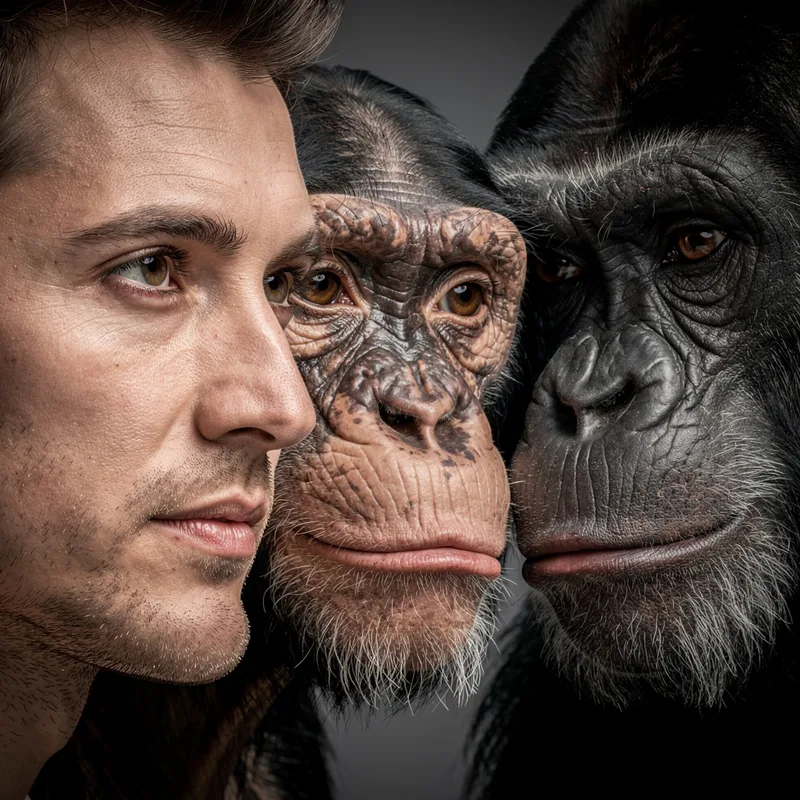
Hominid comes from the Latin homo 'human' and the ending -id 'group' or 'family'. So a hominid is a member of the human family, which is why scientists use it for humans, great apes, and their ancestors.