

human
 ∞
1.0
∞
1.0

- noun
- /ˈhjuːmən/
- As humans, we are always seeking answers.
- modern humans
- humans and animals
- other humans
Loading YouTube…
Watch on YouTubeWell, what if a human doesn't pass the test?
- Well, what if a human doesn't pass the test?
- And does it not take a naive, delusional human to change?
- Otherwise, what you've got is essentially the human being as damaged goods.
- Sure, I was just a human, you know?
- Because potential for me means if a human can sink it, it's there.
- In him I see my grandmother, the toughest human being I've ever known.
- Because potential for me means if a human can think it, it's there.
- So this is something where humans have become really good.
- It's much more what it means to be a human on Earth.
- I believe that, you know, humans can change generationally.
- This child baby human might be the goat.
- He talks about predicating human being of that human being.
- That's really wrong to me, but this particular human for being divisive.
- Algorithmic comparisons and programs and human beings twin label things.
Examples
-
Humans are always seeking answers.
-
Humans have a very unusual pattern to our lives compared with other animals.
-
Sure, I was just a human, you know?
-
I doubt a human could keep her at bay.
-
Or do we tell it to behave as we think a human driver should?
-
Well, one of the greatest of all human virtues is forgiveness.
-
Consider this statement: Humans are fascinated by the idea of other life in the universe.
Academic text (2011) -
Several questions focus on the market and non-market benefits that humans receive from ecosystems.
Academic text (2011) -
Research continues to uncover new facts about humans and how they react to illnesses and treatments.
Academic text (2011) -
Research continues to uncover new facts about humans and how they react to illnesses and treatments.
Synonyms
 ∞
1.0
∞
1.0
A single human being, not an animal or a thing
 ∞
1.0
∞
1.0
Any human being, male or female
 415
1.0
415
1.0
A person who can think, feel, speak, and walk upright
 2
4.0
2
4.0
A modern human group that thinks, uses language, and walks upright
Antonyms

Idioms

Compounds




- Formal
50
3.7
A United States government department that runs national health and welfare programs

 18
3.5
18
3.5
A United States government department that runs health and welfare programs like Medicare and Medicaid


- Specialized
7
4.3
A chemical made by a small gland under the brain that helps the body grow and make new cells

 6
3.7
6
3.7
A person who leads the United States department that runs public health and social services programs

- Specialized
5
3.7
An international project by scientists that maps all human genes
- Formal
1
3.6
A group at the United Nations that promotes and protects people's basic rights worldwide
- Specialized
1
3.4
A virus that attacks the body's defence system by destroying important immune cells and causes AIDS

- Specialized
1
4.3
Putting people's needs and comfort first when designing or making decisions

- Specialized

 1
7.0
1
7.0
A hormone made by the placenta early in pregnancy used in pregnancy tests


- Specialized
1
5.7
The study of how people and the places where they live affect each other

- Specialized
1
4.2
A group of viruses that infect skin, mouth, or genitals and can cause warts and sometimes cancer


- Specialized
A protein from human blood that helps the body fight infections

- Specialized
A field that makes computers understand and use human speech and writing

- Specialized
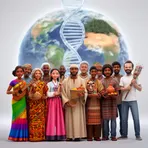
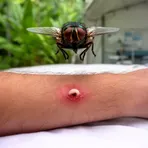
The study of ancient human bones and how people changed over time

- Specialized
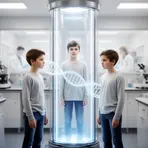
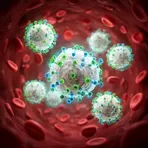
A process that makes a person who has the same genes as another person
- Specialized
A virus that infects people and can cause a blood cancer of white blood cells called T cells

- Specialized
A man-made insulin like the one the human body makes that doctors use to treat diabetes

How Slow

Surface Forms
Etymology
Human comes from the Latin humanus, related to humus meaning 'earth' or 'ground', so a human was originally an 'earth' creature. That's why human as a noun means a person, someone of our species rather than an animal or a machine.