
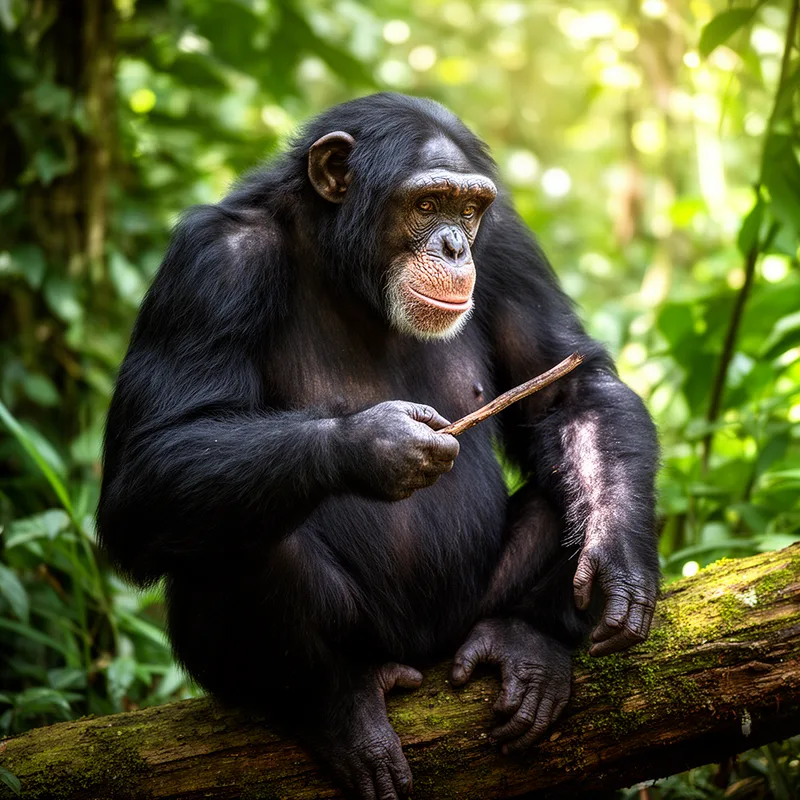
ape
 118
1.0
118
1.0

- noun
- /eɪp/
- The orangutan is one of the most intelligent apes, known for its ability to solve problems.
- monkeys and apes
- great apes
- apes and humans
Loading YouTube…
Watch on YouTubeSo it's lemurs, monkeys, apes, and us.
- So it's lemurs, monkeys, apes, and us.
- But do you know what kind of apes are there in India?
- And the female would only sleep with the the the ape that brought it food, Right.
- The the hand of a, of an, of a ape or an, or a monkey.
- How does that fit into our silly descendant of apes simulation of the world?
- You see, if I may, Bonobos are highly sexual apes.
- It's like when you first saw yourself on screen as this ape, as as Proximus.
- I would say kinds, but nothing like an ape turning into a human.
Examples
-
Researchers study apes to learn more about their social behaviors and communication skills.
-
The orangutans are two species of great apes known for their intelligence, long arms, and reddish-brown hair.
Academic text (2008) -
We have a much larger brain than our ape ancestors.
-
Will looks up; a huge ape sits guard in the back of the wagon.
Fiction book (1996) -
I saw an article that says apes now have entered the Stone Age.
-
What a buzz it was to see these great apes in the wild.
Academic text (2008) -
At the zoo, we saw various species of apes playing and interacting with each other.
Synonyms


 1
8.5
1
8.5
An animal like a human or ape, including animals that lived long ago

A large tailless animal like a gorilla or chimpanzee that is more like humans than other monkeys
Compounds
 5
3.4
5
3.4
A large animal like a gorilla or orangutan with no tail and closely related to humans

- UK
1
8.9
A monkey without a tail that lives on rocky cliffs and in forests of northwest Africa and Gibraltar
- Specialized
A large tailless animal like a gorilla or chimpanzee that is more like humans than other monkeys





How Big
310
1.0
 118
1.0
931
1.0
34
4.2
118
1.0
931
1.0
34
4.2
- Specialized
1
8.0
Surface Forms
Etymology
Ape comes from the Old English word apa, the name people long ago used for these animals, so today ape means a large primate with little or no tail.