
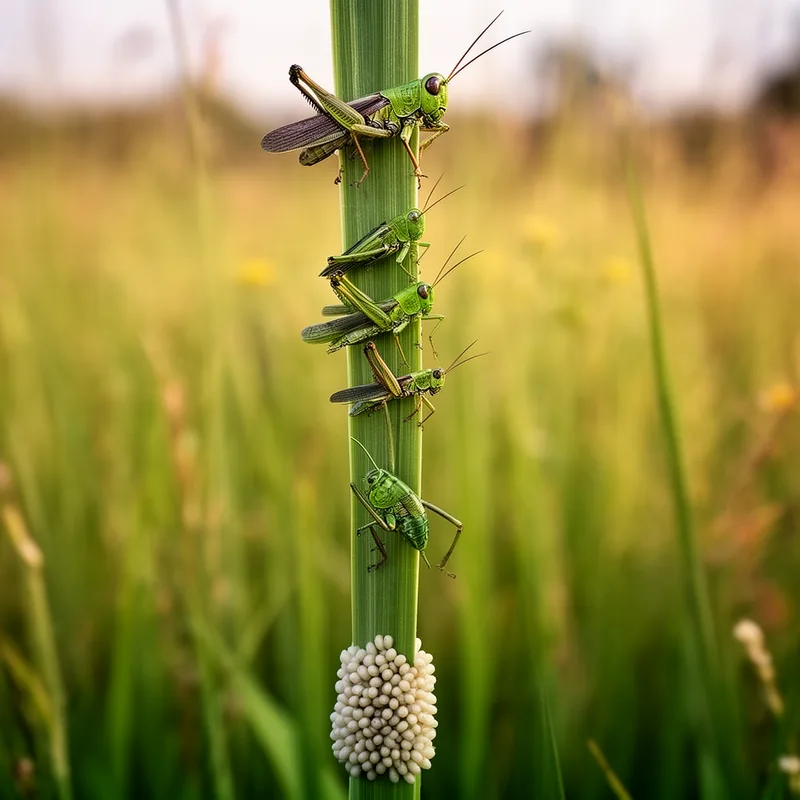
heterometabolous
- adjective
- /ˌhɛtərəʊˈmɛtəˌbɑləs/
- Specialized
- Grasshoppers are heterometabolous insects, developing from nymphs that look much like the adults.
Examples
-
Unlike butterflies, which are holometabolous, cockroaches exhibit a heterometabolous life cycle.
-
The heterometabolous insects include grasshoppers and crickets.
-
In heterometabolous species, there is no pupal stage between the nymph and adult forms.
-
Are all heterometabolous species similar in their life cycles?
-
Grasshoppers are heterometabolous insects, developing from nymphs that look much like the adults.
-
In heterometabolous species, there is no pupal stage between the nymph and adult forms.
-
Cockroaches are an example of heterometabolous insects, as their nymphs resemble the adult stage.
Synonyms
A type of insect development where the nymph looks like the adult and there is no pupal stage

An insect that keeps the same number of body segments as it grows
How Complete
- Specialized

- Specialized
- Specialized
- Specialized
Surface Forms
Morphology
heterometabolous = metabolous (semi-transparent) = hetero + metabolous
Formed by adding the productive prefix 'hetero-' to the specialized adjective 'metabolous'; structure is clear but the meaning is technical and requires domain knowledge.
Etymology
Heterometabolous comes from Greek parts hetero- meaning 'different' and metabolous meaning 'change', the same root you see in metamorphosis and metabolism. So a heterometabolous insect goes through a 'different' kind of change: the young look much like the adults and there is no pupal stage.

