
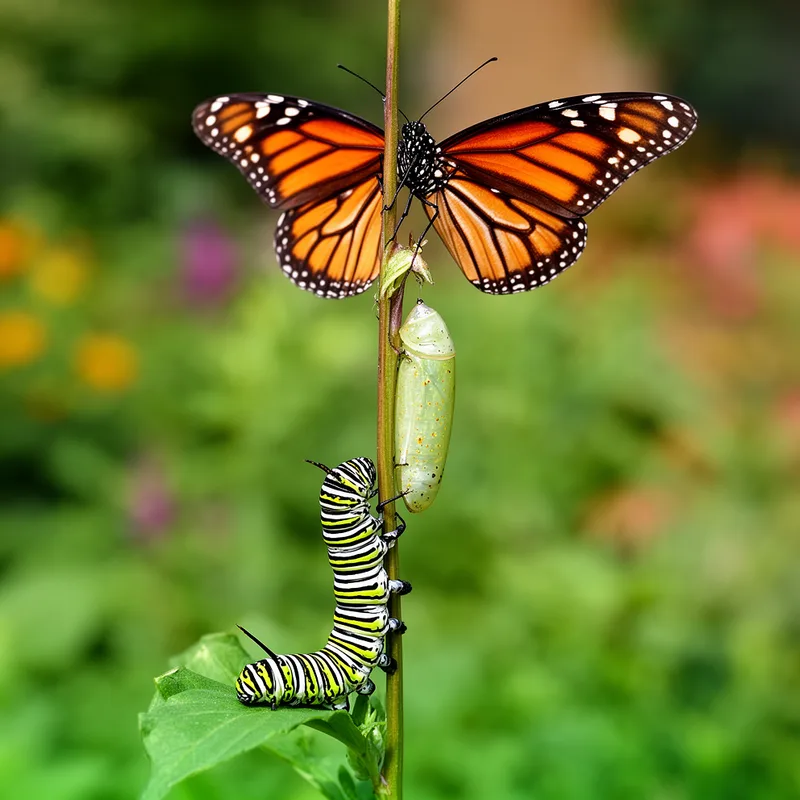
metabolous
- adjective
- /ˌmɛtəˈboʊləs/
- Specialized
- Butterflies are metabolous insects that completely transform from larva to adult.
Examples
-
Scientists compare metabolous and ametabolous insects to study how development alters morphology.
-
Grasshoppers exhibit metabolous changes during their life cycle, progressing through distinct nymph stages.
-
The metabolous insects undergo significant changes in their life cycle.
-
Many metabolous species are fascinating to study.
-
Butterflies are metabolous insects, undergoing a complete transformation from larva to adult.
-
Grasshoppers are metabolous because they experience distinct developmental stages as nymphs before becoming adults.
-
The metabolous life cycle of many insects includes dramatic changes in body form and function.
Synonyms


 1
6.8
1
6.8
Relating to a large change in body shape during an animal's life, like a caterpillar becoming a butterfly
 1
7.6
1
7.6
Changing into a very different form, like a caterpillar becoming a butterfly
Insects that change completely from egg to adult, with larva and pupa stages
Changing completely from an egg to an adult through larva and pupa stages

Having young that change slowly into adults without a pupal stage

An insect whose young live in water and do not look like the adult
Insect development where young grow into adults by shedding skins without a pupal stage
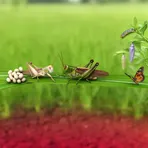
A type of insect development where the nymph looks like the adult and there is no pupal stage

An insect that keeps the same number of body segments as it grows
Surface Forms
Morphology
metabolous = metabolism (opaque) = metabol + ous
Although formed from the combining form 'metabol-' and the adjectival suffix '-ous', the meaning ('undergoing metamorphosis') is not related to metabolic processes and will mislead learners.
Etymology
Metabolous comes from the Greek root metabol- meaning 'change', the same idea you see in metamorphosis and metabolism. So a metabolous insect is one that goes through clear stages and changes a lot from larva to adult.