

to have a sting
 1
7.1
1
7.1

- idiom
- Although he tried to be polite, his words had a sting that hurt her feelings.
Loading YouTube…
Watch on YouTubeIf those words didn't have a sting, I guess I'd be all for Yarin.
- If those words didn't have a sting, I guess I'd be all for Yarin.
Examples
-
Of course her words had a sting, it would ...
Blog text (1) -
If those words didn't have a sting, I guess I'd be all for Yarin.
-
Her critical comments had a sting that lingered long after the meeting.
-
The letter was kind at first, but it ended with a line that had a sting.
Synonyms
 ∞
1.0
∞
1.0
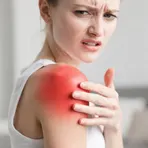
Make someone suffer physical or emotional pain
 706
1.8
706
1.8
To feel a hot, stinging pain after heat or chemicals
 110
5.7
110
5.7
To hurt a person's feelings deeply
 92
3.1
92
3.1
To cause a sharp, stinging pain, often from cold or wind
 45
4.9
45
4.9
To make someone feel sad or upset
 28
4.6
28
4.6
To cause a sudden strong feeling in someone
 26
3.3
26
3.3
To feel sharp emotional pain after someone says something hurtful
 14
4.7
14
4.7
To cause a small sharp pain like a sting
 4
4.0
4
4.0
Cause a small stinging or tingling feeling on the skin
 3
7.7
3
7.7
To say something that hurts someone suddenly and sharply
 2
6.8
2
6.8
To annoy or upset someone in a way that feels sharp
 1
7.6
1
7.6
To deeply hurt someone's feelings


 1
7.9
1
7.9
To hurt someone's feelings very deeply
Antonyms

How Hurtful

Surface Forms
Morphology
The meaning is directly derivable from the parts: 'have' (to experience/possess) + 'sting' (a sharp pain or hurt), so 'have a sting' is interpreted as experiencing a sharp/emotional pain. The construction is a straightforward possessive/experiential pattern (have + noun) and the metaphorical use of 'sting' is predictable and cross-linguistically common, so a B1 learner who knows the constituents would likely understand it.
Etymology
Have a sting comes from the picture of an insect's sting: a bee or wasp gives a sudden, sharp pain. If words or actions have a sting, they are like that sharp pain and leave you feeling hurt, so the phrase means 'to cause emotional pain'.