

to grub out
- phrasal verb
- /ɡrʌb aʊt/
- UK
- Before laying a new lawn, it is essential to grub out any unwanted stumps and roots from the ground.
- grubbing out the stumps
Examples
-
They drive up to old orchards and old hay meadows that some other person has grubbed out of the woods and call it something fine.
Fiction book (1990) -
We reached the airstrip we had made in a long open meadow by running the car and the truck up and down through the new short grass and grubbing out the stumps and roots of a patch of brush at one end.
Fiction book (2000) -
To prepare the garden for planting, you need to grub out the old roots and debris left from last season.
-
The crew worked hard to grub out the invasive plants that were choking the native species in the area.
Synonyms

 139
2.0
139
2.0

To take something out of the ground by digging
 38
4.4
38
4.4
To pull a plant out of the ground or force people to leave home
 21
7.5
21
7.5
To dig up plants or root crops from the ground for harvest
 14
3.2
14
3.2
Remove something that is under the ground or snow using a shovel
 1
4.0
1
4.0
Pull a plant up from the ground so it cannot grow back

To dig up and remove plants or roots from the ground
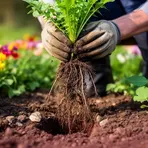
Pull something completely out of the ground by its roots
Antonyms


How Thorough

Surface Forms
Morphology
The meaning 'to dig up or remove from the ground' is directly derivable from combining 'grub' (to dig in soil) with the particle 'out' (indicating removal or outward direction). This follows a regular English verb+particle composition where 'out' signals extraction, so a B1 learner who knows both constituents would readily infer the MWE's meaning.
Etymology
The verb grub out comes from gardening work: grub means to dig around and pull up roots, and out shows removing something from the ground. Picture someone digging hard to pull a tough stump out of the soil — that's why grub out means 'to dig up or remove something' today.