

to gloss over
 22
6.5
22
6.5

- phrasal verb
- /ɡlɔs ˈoʊvər/
- It is easy to gloss over small mistakes in a presentation, but it's important to address them.
- gloss over important details
- gloss over the fact
- gloss over the problem
Loading YouTube…
Watch on YouTubeI just, I don't want to gloss over too much what went down.
- I just, I don't want to gloss over too much what went down.
- But it's really important to not gloss over it.
- But I'm busy and so often awesome things will happen and I just sort of gloss over them.
- Another flaw is the glossing over of pain mangling and the ordinary grim process of dying.
- I mean, the hypocrisy, you can't overstate it with MAGA, but it's just, it's so commonplace, you kind of just gloss over it.
- And to have this giant piece of your past that informs who you are and constantly finding ways to gloss over it.
- This all sounds quite obvious, but what's happened is that some people who think they're being particularly environmentally friendly are glossing over these problems.
- And, you know, I've glossed over a lot of the history here, but now we're in a situation where video is better than film.
Examples
-
I mean, on anything we are talking about, like to be honest, we're glossing over the most simple aspect of it.
-
Whatever it is, there's no way I can gloss over the facts here and make it sound good.
-
And I think we can kind of gloss over a lot of the problem and just agree on the solutions.
-
Yeah, well, the books kind of glossed over that part.
-
A correct analysis of the global economic order cannot gloss over this reality without losing its critical edge.
Academic text (2010) -
The entire rights issue is just being glossed over by these people, male and female.
Blog text (13) -
And that was, you know, in the movie, it kind of just glossed over that aspect.
-
You can't gloss over serious problems, everybody.
-
Yeah, this seems to be the biggest misconception and it is disappointing that that part was glossed over so quickly.
-
Academics and business theorists often gloss over the basics of leadership, preferring to trivialize their importance.
Blog text (1)
Synonyms
 59
5.3
59
5.3
Show something as less important or serious than it is
 56
3.6
56
3.6
Leave out small or less important information when explaining something
 38
5.9
38
5.9
To ignore a small mistake to avoid an argument
 28
7.0
28
7.0
Make something seem less important or serious
 28
4.1
28
4.1
To ignore someone or something on purpose
 18
4.9
18
4.9
Make a problem or argument seem less serious without fixing it
 16
4.3
16
4.3
To make something seem less important than it really is
 13
4.5
13
4.5
Ignore a person or thing because you think they are not important
 12
6.0
12
6.0
To hide bad facts to make something seem better
 8
7.7
8
7.7
To hide a problem instead of dealing with it openly
 6
5.3
6
5.3
Make something seem less important than it really is
 5
5.6
5
5.6
To act as if you do not see something to avoid making someone feel embarrassed
 5
7.9
5
7.9
Try to hide problems instead of dealing with them
 2
7.2
2
7.2
Stop people finding out about a mistake, crime, or embarrassing event
 1
6.0
1
6.0
To avoid answering a difficult question by changing the subject
 1
6.9
1
6.9
Handle a problem quickly without looking at the details


 1
6.7
1
6.7
To give too little attention to something

To make someone's problems seem less important than they are

Treat a problem as less important to avoid dealing with it

To hide problems or make them seem less serious

To ignore or hide problems instead of dealing with them

To deal with a subject quickly and without enough detail

To deal with something quickly and not in enough detail
Antonyms



How Downplayed

Surface Forms
Morphology
gloss + over
The verb 'gloss' already carries the core meaning 'present favorably/to hide faults,' and the particle 'over' simply adds the sense of doing this across or superficially; therefore the overall meaning is directly derivable from the known constituents. Cross-linguistically similar constructions exist (e.g., expressions meaning 'pass over' or 'skip over faults'), so a B1 learner who knows both words would likely infer the MWE's meaning.
Etymology
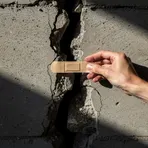
Gloss over comes from putting a thin, shiny layer called a gloss over something. If you put a gloss over a crack, the crack is less visible, so to 'gloss over' a problem means to hide it or make it seem less important by not talking about the details.