

to flow off
- phrasal verb
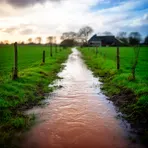
- She noticed the mud flow off the path after the heavy rain.
- water flow off
- rain flowing off
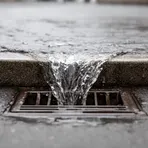
- flows off the surface
Examples
-
After a while it begins to flow off the edges.
-
During the winter months when there are no leaves, you can sometimes see the water flowing off the mountain from Highway 68.
Blog text (14) -
The rain started to flow off the roof and onto the ground.
-
Water from the melting snow began to flow off the slope into the nearby stream.
Synonyms

 588
1.0
588
1.0

To make liquid flow in a steady stream from a container
 198
1.0
198
1.0
To let liquid flow away from something
 70
3.4
70
3.4
To flow slowly in drops or a thin stream
 31
2.5
31
2.5
To flow down a surface like water on a window
 28
1.3
28
1.3
Water or other liquid flows out of a container by accident
 22
2.9
22
2.9
Make liquid flow out of a container
 16
2.9
16
2.9
Move or pour out in a steady stream, often a liquid
 15
3.2
15
3.2
Move slowly through the air or water until out of sight
 7
2.9
7
2.9
Flow away from a surface into drains or rivers
 4
3.3
4
3.3
To move along with a strong flow of water
 1
5.6
1
5.6
To move back slowly, like water leaving a shore
 1
3.2
1
3.2
Water moves away slowly in a steady stream

Move back, like a tide, or become less strong over time
To flow back or become less strong slowly
How Fast

Surface Forms
Morphology
The meaning is directly derivable from combining 'flow' (to move steadily in a stream) with the particle 'off' (away from a surface or place): together they describe liquid moving away from a surface. This verb+particle pattern is a common, spatially compositional construction found across languages, so a B1 learner who knows the parts will understand it.
Etymology
Flow off gives a simple image: imagine rainwater running down a roof and leaving the surface in a thin stream. The verb flow is the moving liquid and off shows it going away, so the phrase means 'to move away from a place gradually'.