

to flow away
 1
3.2
1
3.2

- phrasal verb
- The ford itself looked to be no more than three feet deep, though much deeper water approached and flowed away from the spot.
- water flowed away
- flowed away like a stream
Loading YouTube…
Watch on YouTubeWhen they melt, they'll flow away and it'll leave you with perfectly clear channels.
- When they melt, they'll flow away and it'll leave you with perfectly clear channels.
Examples
-
The water rose into the air and then began to flow away, pouring off a massive shape that still lay concealed by the foaming brine.
Fiction book (1992) -
After the heavy storm, the rivers finally started to flow away from the flooded areas.
-
So this corona mass ejection flows away from the sun and it travels.
-
When they melt, they'll flow away and it'll leave you with perfectly clear channels.
-
After a heavy rain, excess water in the crop's root zone enters the pipe through the perforations and flows away from the field to a ditch, stream, or other outlet.
Academic text (2002) -
From there, the water flowed away through the paddock in a wide stream, eventually forming the border between the Tiernan land and Merimbula, the huge cattle station to the south.
Fiction book (1994) -
As the rain continued, the excess water began to flow away down the street toward the drainage system.
-
When the ice melts, the resulting water will flow away and create a stream in the valley.
Synonyms
 259
1.6
259
1.6
To move smoothly and continuously, like people or traffic
 198
1.0
198
1.0
To let liquid flow away from something
 28
1.3
28
1.3
Water or other liquid flows out of a container by accident
 26
3.6
26
3.6
Move out of a place suddenly in large numbers or fall out of a container and spread
 18
2.9
18
2.9
Move out of a building in large numbers
 16
2.9
16
2.9
Move or pour out in a steady stream, often a liquid
 12
3.7
12
3.7
To leave a place quickly in large numbers
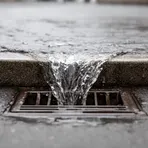 7
2.9
7
2.9
Flow away from a surface into drains or rivers
 4
3.3
4
3.3
To move along with a strong flow of water
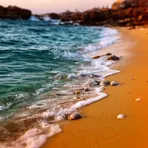 1
5.6
1
5.6
To move back slowly, like water leaving a shore
 1
2.6
1
2.6
Move with a river's current toward a lower place
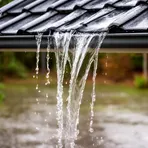
To move away from a surface in a steady stream, like water does

To flow out in large amounts, like tears or blood

Move back, like a tide, or become less strong over time
Antonyms


How Fast

Surface Forms
Morphology
The meaning is directly and transparently derived from combining 'flow' (to move in a stream) with 'away' (movement to another location), so a B1 learner who knows both words can infer that something moves or is carried away. This is a common verb+particle compositional pattern in English (and cross-linguistically), with no idiomatic shift, making the expression predictable from its parts.
Etymology
Flow away comes from the simple image of water moving out of a place. The word flow shows a steady movement like a stream and away shows leaving, so flow away means 'to move or be carried away'.