
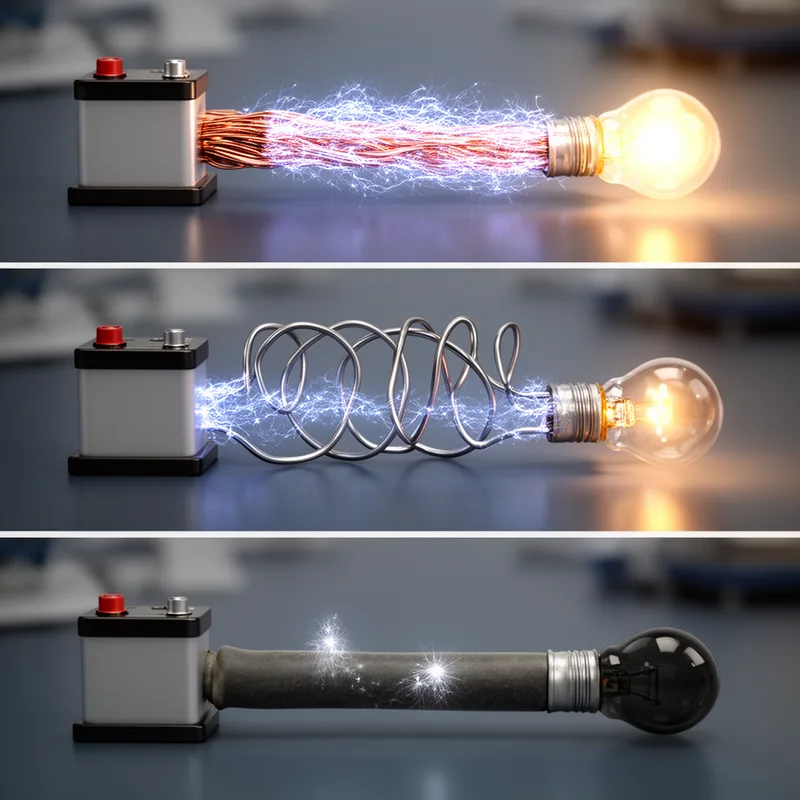
electric resistance
- noun
- /ɪˈlɛktrɪk rɪˈzɪstəns/
- Specialized
- electric resistance heat
- electric resistance welds
Loading YouTube…
Watch on YouTubeSo it's real high, really low electrical resistance in these things.
- So it's real high, really low electrical resistance in these things.
Examples
-
The unavoidable electric resistance within each cell produces sufficient heat to keep the cryolite-alumina mixture molten.
Blog text (18) -
The electric resistance of the wire increased as it heated up during use.
-
To calculate electric resistance, you can use Ohm's law, which states that resistance equals voltage divided by current.
-
Electric resistance is the key factor that determines how much energy is lost as heat in electrical circuits.
Synonyms
 46
4.4
46
4.4

How much a material reduces electric current
 2
7.9
2
7.9
The amount a material stops electric current, measured in ohms


 1
3.9
1
3.9
The amount a material stops or slows the flow of electric current
A measure of how much a wire or part stops electric current, shown in ohms
How High

Surface Forms
Morphology
The phrase 'electric resistance' is fully compositional: 'electric' specifies the domain (relating to electricity) and 'resistance' denotes opposition to flow, so the combined meaning (opposition to electric current) follows directly from the constituents. This is a standard technical compound found across languages and in scientific contexts, so a B1 learner who knows both words would readily infer the MWE's meaning.
Etymology
Electric resistance uses the picture of electricity as water in a pipe: electric is the flow and resistance is what makes the flow harder. So, materials that make the flow harder have more electric resistance, which means they 'oppose' the electric current.