

to die away
 8
4.2
8
4.2

- phrasal verb
- /daɪ əˈweɪ/
- A dog barked in the distance, a long staccato peal that died away with jarring sharpness.
- the voice dies away
- the sound died away
- gradually die away
Loading YouTube…
Watch on YouTubeThis is the unity in which the accent dies away.
- This is the unity in which the accent dies away.
- Don't let that flirty energy die away.
- When either of these results has become apparent, controversy on the subject flags and gradually dies away.
- The pathogen loads die away rather fast the further North and South you go from the from from the equator.
- For like the grass they will soon wither, like green plants they will soon die away.
Examples
-
As the last notes of the hymn died away, though, Caudell looked around in puzzlement.
Fiction book (1992) -
Then the light dies away, and the animal moves on as though nothing has happened.
Fiction book (1991) -
And if I just play one note, you can hear that it dies away very quickly.
-
But the cheers die away soon, too soon; more than a few cut off by tears.
Fiction book (1991) -
The sounds of his pursuers dropped further and further back and presently died away altogether.
Fiction book (1992) -
The dawn chorus of rainforest birds has died away, leaving behind a pronounced calm.
Academic text (1992) -
The familiar sounds of birds and insects died away, fading into an expectant hush.
Fiction book (1992) -
The sound of the waves gradually die away as the tide recedes.
-
As the music played on, its notes slowly die away into silence.
-
Over time, the pain from the injury will die away and you'll feel normal again.
Synonyms
 840
4.8
840
4.8
To stop being felt, as a feeling or idea
 531
1.2
531
1.2
To slowly become less visible, bright, or loud
 93
4.0
93
4.0
An effect or feeling that becomes less strong and then stops
 72
5.1
72
5.1
To become smaller or less in number over time
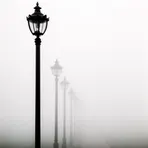 69
3.0
69
3.0
To become weaker and then disappear over time
 54
3.8
54
3.8
To become less strong, especially for bad weather, pain, or pressure
 48
6.8
48
6.8
To make something spread out and disappear, for example fog or tension
 47
4.8
47
4.8
Become less strong, as with pain, noise, or excitement
 47
3.7
47
3.7
To stop existing over time, for example animals or traditions
 46
2.7
46
2.7
To become less strong or loud over time
 38
4.1
38
4.1
Gradually become less strong until a feeling is gone
 29
4.8
29
4.8
To move back or become less strong
 23
6.8
23
6.8
To become less strong or severe and to make something do the same
 19
4.3
19
4.3
To become less in amount or quality
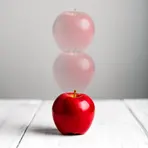 15
3.9
15
3.9
Gradually become harder to see or quieter until it disappears
 14
6.3
14
6.3
To lose electrical charge or current slowly over time
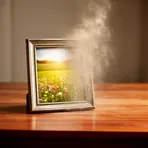 12
3.5
12
3.5
To slowly disappear or stop existing
 9
5.6
9
5.6
To slowly become weaker and then stop
 2
3.3
2
3.3
To become less over time
 1
4.6
1
4.6
Slowly get smaller in number or amount until nothing remains
 1
5.6
1
5.6
To move back slowly, like water leaving a shore

To become less strong over time

To disappear slowly like mist
Antonyms


How Strong

Surface Forms
Morphology
The meaning 'to gradually become less strong and disappear' is directly derivable from 'die' (to fade or stop) combined with 'away' (to disappear/fade out); both constituents contribute transparently to the sense of gradual fading. This verb+particle composition is a common, predictable pattern cross-linguistically, so a B1 learner who knows the words would readily understand the MWE.
Etymology
The phrasal verb die away uses the image of something that dies and goes away, like a voice or a fire that gets quieter or smaller until it is gone. That's why it means 'to gradually become less strong and eventually disappear'.