

to fade out
 15
3.9
15
3.9

- phrasal verb
- /feɪd aʊt/
- As the song ended, the music began to fade out until it was barely audible.
- instruments fade out
Loading YouTube…
Watch on YouTubeIf they don't like us or decided to fade out, it's very tempting just to go.
- If they don't like us or decided to fade out, it's very tempting just to go.
- But when you buy a piece too cheap, you'll see the colors fade out very quickly with washes.
- Whereas A freck, it takes a lot more to kind of even begin to fade out.
- But there's always the danger that a second hand tragedy will very soon fade out and become a non tragedy.
- It was more just a slow letting go and spending less time with people that then it kind of fades out.
Examples
-
As it approaches, all the other noises fade out, and the piano is all that we hear.
Fiction book (2000) -
The other figures faded out, leaving only those two beside the fence.
Fiction book (1992) -
- Yeah, I was for a minute, and then I just kind of faded out.
-
But something made it fade out just now, and come back again a minute later.
Fiction book (1996) -
And then it fades out into the darkness again.
-
In fact, Familism as a whole soon faded out of the public eye.
Academic text (2018) -
Lights flickered on in their path and faded out again behind them as they walked.
Fiction book (1999) -
Evening fell very slowly, casting no shadows, simply fading out the colors one by one.
Fiction book (2001) -
Feedback from the instructor can be frequent at the beginning and fade out as the student improves.
Academic text (2010) -
The sunlight grew dimmer, then faded out entirely when the overdrive kicked in.
Fiction book (2000)
Synonyms
 ∞
1.0
∞
1.0
To stop being seen or to no longer be there
 531
1.2
531
1.2
To slowly become less visible, bright, or loud
 463
1.0
463
1.0
To stop being seen or felt
 93
4.0
93
4.0
An effect or feeling that becomes less strong and then stops
 73
2.8
73
2.8
To become part of the background and less clear
 69
3.0
69
3.0
To become weaker and then disappear over time
 43
3.9
43
3.9
To slowly disappear or become less clear
 19
4.3
19
4.3
To become less in amount or quality
 15
3.2
15
3.2
Move slowly through the air or water until out of sight
 9
5.6
9
5.6
To slowly become weaker and then stop
 9
4.5
9
4.5
To become smaller or weaker over time until it stops
 8
4.2
8
4.2
To become quieter and then stop

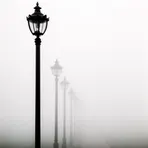
To disappear slowly like mist

To become gradually quieter
Antonyms


How Noticeable

Surface Forms
Morphology
The meaning is directly derivable from combining 'fade' (to become less visible or intense) with the particle 'out' signaling diminution to the point of disappearance; the composition yields the described gradual loss. This verb+out pattern is a common, regular phrasal-verb construction in English (and parallels exist in many languages), so a B1 learner who knows both constituents will readily infer the MWE meaning.
Etymology
Fade out comes from old movies and songs, where people slowly made the picture or sound get fainter. Because the fade was taken out until nothing was left, it now means 'to slowly become less noticeable'.