
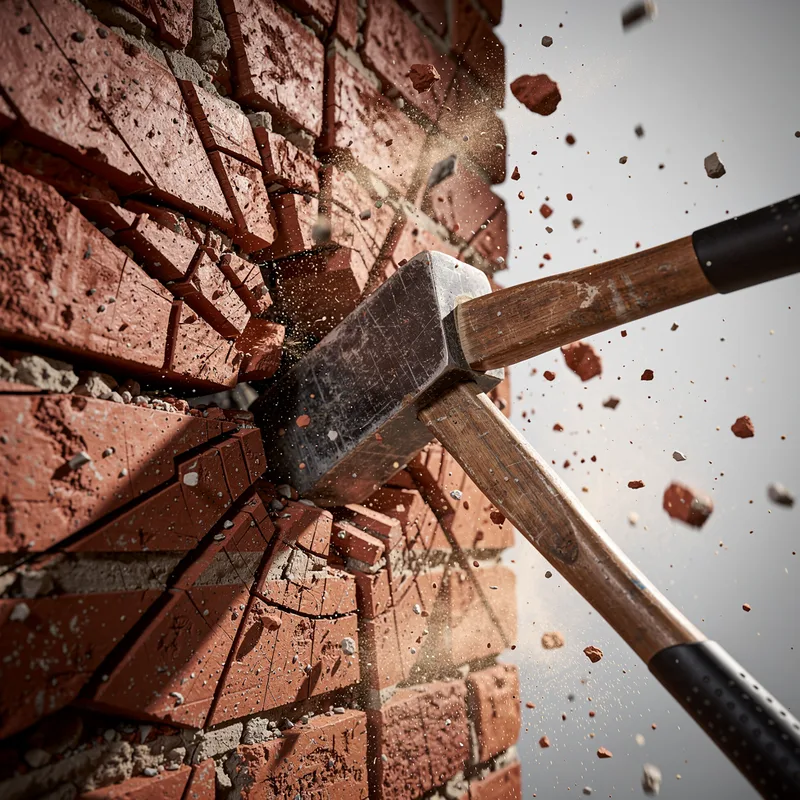
destructive
 236
4.2

- adjective
- /dɪˈstrʌktɪv/
- What do you think is the most destructive ideology?
- self-destructive
- destructive forces
- constructive and destructive
Loading YouTube…
Watch on YouTubeThis means conflict that is destructive to both sides.
- This means conflict that is destructive to both sides.
- Streams of fire destructive of all structured form.
- But are you being constructive versus destructive in your behaviors?
- So it has a very definite destructive effect on those.
- And we are seeing the fallout from how destructive that is.
- I think it has destructive psychological effects.
- But are you being constructive versus destructive in your behaviours?
- Thanks to fakes opposition, there's somebody to check the destructive rampage of wokeness.
- But they can often have a destructive impact from mud and from ash.
- These two narratives are very destructive to the country.
Examples
-
The point is that mandates are out of place and destructive in a university.
Academic text (1990) -
Speaking of wind, the winds are increasingly destructive in our world.
-
You know, this is such a destructive image.
-
This means conflict that is destructive to both sides.
-
The most destructive force in the universe, Harry.
-
I think it has destructive psychological effects.
-
But these exercises are meant to get you past the destructive behaviors that brought you here.
-
The greatest power in the universe, unparalleled in its destructive capabilities.
-
Hopefully, learners will learn to make positive choices and not choose destructive endeavors in life.
Academic text (1999) -
The hurricane caused destructive winds that flattened entire neighborhoods.
Synonyms
 307
5.1
Causing very great damage or sadness
 158
2.6
Causing damage to people, animals or things
 151
7.0
Causing very great damage or harm
 126
3.1
Likely to cause harm to a person or to their things
 48
6.3
Causing harm to people, things, or the environment
 10
7.0
Causing very serious harm to people or businesses
 9
8.5
Harmful to people, animals, or plants
 2
7.4
Making people, places, or things suffer very severe damage


 1
9.1
Causing great harm or serious damage
 1
9.1
Intended to destroy things completely
 1
9.9
Something that destroys completely, like a powerful bomb
 1
9.9
Causing very large, sudden destruction that changes a place
 1
8.9
Causing total destruction
Causing complete destruction so nothing is left
Antonyms


Compounds

- Specialized
Heating a solid material without air so it breaks down and makes gases and liquids that you collect

- Specialized
The process that breaks down food and body tissue to release energy
Breaking down large molecules in the body into smaller parts to release energy
How Destructive

Surface Forms
Morphology
Etymology
Destructive comes from Latin parts de- meaning 'down' and struct meaning 'build', the same root you see in structure and construct. So something destructive is like 'pulling down' or 'un-building', which is why it means causing great damage.