
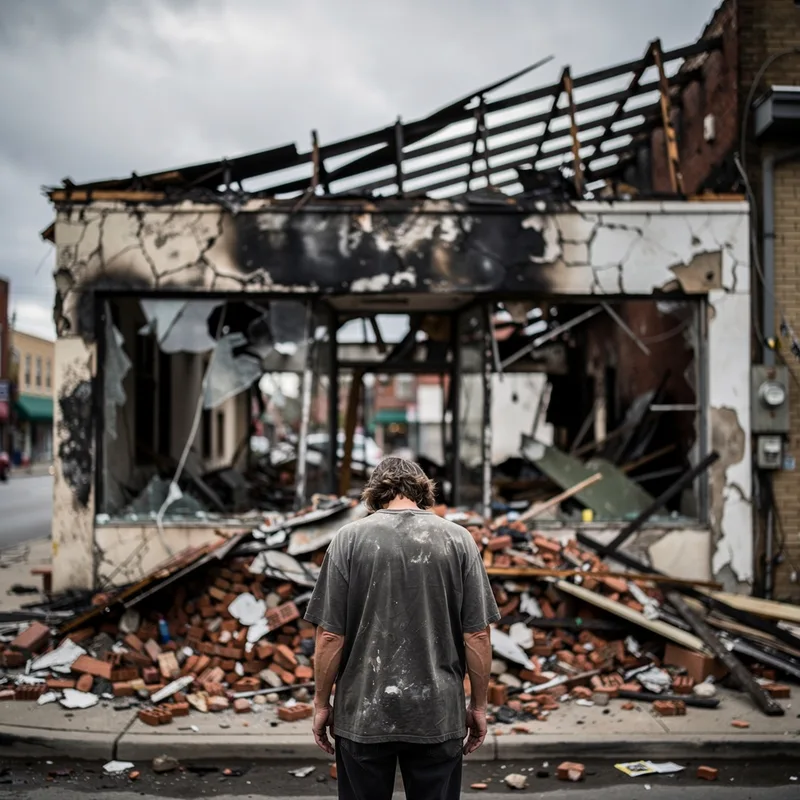
ruinous
 10
7.0
10
7.0

- adjective
- /ˈruːɪnəs/
- Excessive borrowing can lead to ruinous debt that takes years to repay.
- ruinous competition
- ruinous effect
Loading YouTube…
Watch on YouTubeI will not go down the road of reaction or the ruinous path of partisanship.
- I will not go down the road of reaction or the ruinous path of partisanship.
- You know, people have shopping addictions, which can be, you know, obviously financially ruinous, right?
- Complacency and arrogance make a ruinous compound.
- And then also California high speed rail, which is ruinous in many ways, but it is is lighter, let's say.
- And, you know, ruinous in many respects to not only moral life, but even being able to do things like hold down a job depending on what kind of drug we're talking about.
Examples
-
As you know, I hate exaggeration, but everything we believe in, everything I believe in - democracy, culture - will be destroyed if we get involved in this ruinous war.
-
The combination of poor populations, ruinous climate, and nonexistent infrastructure does not attract major automakers.
Academic text (1999) -
The cost would be ruinous.
-
I could hear that the person on the line was very nervous, afraid of a ruinous lawsuit.
Fiction book (1991) -
Both possibilities would be ruinous for U.S. interests.
Academic text (2010) -
Such overconfidence could be ruinous.
-
The center and the south wing of the immense house were roofless and ruinous.
Fiction book (2000) -
He bought lands at ten times their value and purchased pictures and articles of virtue at ruinous prices.
-
To the Founders, a standing army posed a threat of both tyranny and ruinous military adventurism.
Academic text (2000) -
Despite the ruinous economic consequences of Mugabe's personal vendettas, ZANU-PF continues to endorse such invasions.
Academic text (2010)
Synonyms
 243
4.2
243
4.2
Causing great damage or harm
 224
5.1
224
5.1
Causing very great damage or sadness
 161
2.6
161
2.6
Causing damage to people, animals or things
 144
7.0
144
7.0
Causing very great damage or harm
 126
3.5
126
3.5
Causing very great harm, suffering, or failure
 80
3.1
80
3.1
Likely to cause harm to a person or to their things
 22
9.1
22
9.1
Causing sudden very great damage to people, buildings or land
 6
7.9
6
7.9
An event that causes great harm or loss

 1
9.1
1
9.1
Causing great harm or serious damage

Making people, places, or things suffer very severe damage

Causing very large, sudden destruction that changes a place
How Destructive

Surface Forms
Morphology
Etymology
Ruinous comes from the Latin root ruina, meaning 'a fall' or 'collapse', and it is the same idea as the English word ruin. So something ruinous causes serious damage or ruin, like a fire or storm that brings buildings down.