

deafness
 11
2.7
11
2.7

- noun
- /ˈdɛf.nəs/
 :
sordera
:
sordera
- In the past two years, he'd been misdiagnosed with everything from deafness to autism to attention deficit disorder.
- adventitious deafness
- cause of deafness
- severe deafness
And they have really nasty side effects, kidney damage, liver damage, deafness and blindness.
- And they have really nasty side effects, kidney damage, liver damage, deafness and blindness.
- And I did have glue here, but it, but my, my, my deafness, there's no trace of it now particularly.
- Send Beethoven to an autolaryngologist to be operated on to correct his growing deafness.
- It's genomic reincarnation, it is restoring sight and it is curing deafness with, you know, the, the, you know, artificial eyes and artificial ears.
- Self-discipline helped Helen Keller to triumph over deafness, blindness and dumbness, a combination of afflictions such as most people never experience.
- Yeah, You have obviously people who have essentially limitation of blindness or deafness.
- So what I did in my lab is build a vest with vibratory motors all over it, and we tested for deafness for people who are deaf.
- So her endurance, her deafness, her idealism married to good business sense, those are all great lessons for our moment.
Examples
-
Almost all deafness is because of loss of hair cells, but the elegant cochlear spiral remains.
-
After the accident, he was diagnosed with partial deafness, making it hard for him to hear high-pitched sounds.
-
I teach my students that deafness is not a disability.
-
Early in the course of the disease, deafness is primarily for the low tones.
Academic text (1995) -
Much has been written about Beethoven's deafness, but my favorite story is this one.
-
There are various degrees of deafness, Mr. Fenn.
-
Beethoven's best work comes in his late period, a period of complete deafness.
-
I'm assuming there's no history of deafness in your family?
-
According to Peterson and Siegal, deafness alone did not predict delays in ToM development.
Academic text (2012) -
A 66-year-old woman complained of left ear deafness associated with a severe exacerbation of previously mild tinnitus.
Academic text (1998)
Synonyms
 13
2.7
13
2.7
A condition in which you cannot hear well in one or both ears
 1
3.9
1
3.9
Partial or total loss of the ability to hear


 1
3.3
1
3.3
A problem that makes it hard to hear sounds or understand speech

A partial loss of hearing that makes sounds quieter
Antonyms

Compounds

- Specialized
Hearing loss from a problem in the middle ear that stops sound reaching the inner ear

- Specialized
Hearing loss caused by problems with the small bones in the middle ear
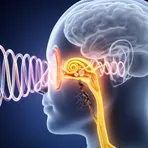
- Specialized
Hearing loss caused by damage to the inner ear or the part that sends sound to the brain



- Specialized
A problem where a person cannot understand speech even though hearing is normal
How Deaf
11
2.7
 13
2.7
13
2.7
Surface Forms
Morphology
Etymology
Deafness comes from the old English word deaf, which meant 'unable to hear' and is like an old German word that meant 'silent'. The ending -ness makes it the 'state of not hearing', so deafness means not being able to hear.