
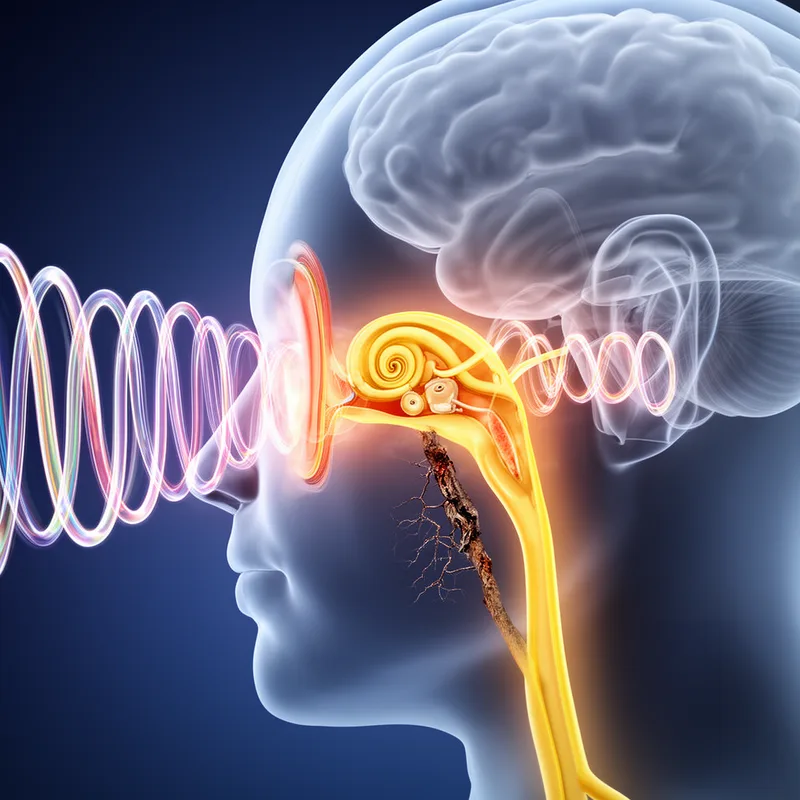
nerve deafness
- noun
- /nɜrv ˈdɛf.nəs/
- Specialized
- She was diagnosed with nerve deafness, which made it difficult for her to hear high-frequency sounds.
Examples
-
Doctors believe that nerve deafness can result from viral infections affecting the inner ear.
-
Many people have experienced nerve deafness due to exposure to loud noises over time.
-
The latter is often associated with congenital nerve deafness.
Academic text (1996)
Synonyms

 13
2.7
13
2.7

A condition in which you cannot hear well in one or both ears
 11
2.7
11
2.7
A condition in which a person cannot hear well or at all
 1
3.9
1
3.9
Partial or total loss of the ability to hear


 1
5.3
1
5.3
Hearing loss from damage to the inner ear or the nerve that sends sound to the brain
How Severe

Surface Forms
Morphology
The term is a direct compound of 'nerve' + 'deafness' and denotes deafness caused by problems with the nerve; a learner who knows both words can infer that meaning. Although medical in register, the noun+noun composition is compositional and cross-linguistically transparent, so a B1 learner is likely to understand it.
Etymology
Nerve deafness comes from the idea that the nerve carrying sound to the brain is damaged, so the ear cannot send messages. That's why deafness here means 'hearing loss' even when the ear looks normal.