
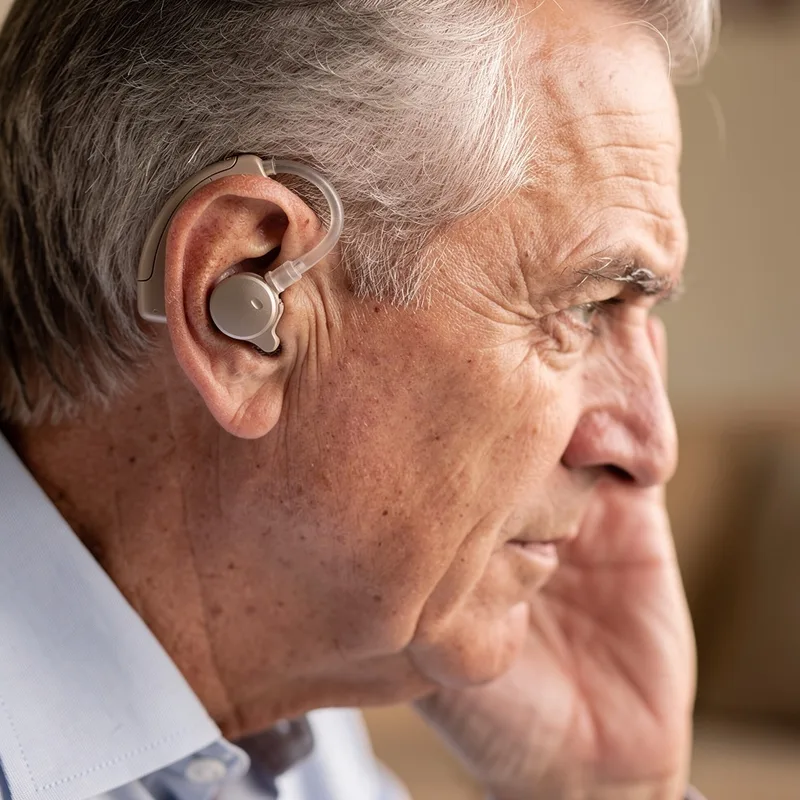
hard of hearing
 13
3.4
13
3.4

- adjective
- /hɑrd əv ˈhɪrɪŋ/
- My grandmother is hard of hearing and often asks us to speak louder.
- hard of hearing children
Loading YouTube…
Watch on YouTubeAnd then the grandson turned towards me and said, Prabhuji, she's hard of hearing.
- And then the grandson turned towards me and said, Prabhuji, she's hard of hearing.
- And so the hearing, the hard of hearing, the deaf, the hearing people were sharing an experience at a concert.
Examples
-
Max Ramsey is hard of hearing from all those years on a noisy tractor.
Blog text (8) -
She is hard of hearing.
-
Before then, you were very hard of hearing.
-
Are you hard of hearing?
-
The Senator is just a little hard of hearing.
-
It's important to have students who are deaf or hard of hearing watch the director more than the music.
Academic text (2006) -
Speak louder, I'm hard of hearing!
-
l'm a little hard of hearing in my right ear.
-
A few months ago I was on the phone with my great aunt, who's hard of hearing, and pretty much out of it in general.
-
We didn't know it at the time until Louie was about three years old, we found out that he was hard of hearing.
Synonyms
 212
1.0
212
1.0
Not able to hear, completely or partly
 7
3.4
7
3.4
Having little or no ability to hear


 1
4.2
1
4.2
A person who cannot hear well
Antonyms

How Deaf

Surface Forms
Morphology
hard + of + hearing
The meaning 'having partial loss of hearing' is directly derivable from 'hard' (difficult) combined with 'hearing' (the ability to hear): the phrase says hearing is difficult for the person. This compositional adjective + of + noun pattern is transparent and cross-linguistically accessible, so a B1 learner who knows the words would readily infer the intended meaning.
Etymology
The phrase hard of hearing uses hard in the sense of 'difficult' and hearing for listening, so imagine sound having trouble getting through, as if blocked by a wall. So, hard of hearing means 'having trouble hearing' or 'not able to hear well'.