

hearing loss
 13
2.7
13
2.7

- noun
- /ˈhɪrɪŋ lɔs/
- Well, hearing loss can happen and that's because of that fluid buildup behind the eardrum.
- sensorineural hearing loss
- conductive hearing loss
- severe hearing loss
Loading YouTube…
Watch on YouTubeMost violinists have hearing loss in their left ear from playing.
- Most violinists have hearing loss in their left ear from playing.
- I was having to Skype with someone and that you're finding a lot of hearing loss with younger musicians that are from earbuds.
- Huge man full of muscles and he was relentlessly bullied because he has hearing loss so kids would make fun of the lady talk.
- I'll show you tons of data that say how you eat, how you exercise, how you sleep, how you manage hearing loss, how you manage depression.
- And he said, I asked him what he did and he said that he is someone who checks for hearing loss.
- So I've already mentioned autism, ADHDMS, dementia, sight, we're hearing loss, the whole works, not being able to work very well, everything.
Examples
-
Lamina is an intelligent, capable person, but for her, hearing loss has meant the end of her career.
-
Audiogram obtained three weeks postoperatively shows a moderate to severe hearing loss in the patient's left ear.
Academic text (2008) -
OK so most normal hearing loss is in the high range.
-
Now the second most common form of hearing loss is due to loud noise.
-
As a major cause of communication disorders, hearing loss has a serious impact on the general population.
Academic text (1993) -
Findings in patients with hearing loss will be reported in a future publication.
Academic text (1995) -
His history revealed a slight right hearing loss and tinnitus of two years' duration.
Academic text (1995) -
Sometimes, short-duration exposure to sound may cause temporary hearing loss called a temporary threshold shift.
Academic text (2008) -
Cumulative overexposure to loud sounds eventually results in permanent hearing loss that will not recover over time.
Academic text (2008) -
Cumulative overexposure to loud sounds eventually results in permanent hearing loss that will not recover over time.
Synonyms
 11
2.7
11
2.7
A condition in which a person cannot hear well or at all
 1
3.9
1
3.9
Partial or total loss of the ability to hear


 1
3.3
1
3.3
A problem that makes it hard to hear sounds or understand speech
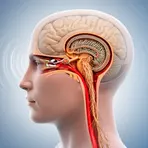 1
5.3
1
5.3
Hearing loss from damage to the inner ear or the nerve that sends sound to the brain

A partial loss of hearing that makes sounds quieter
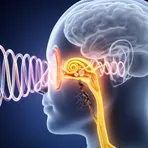
Hearing loss caused by damage to the inner ear or the part that sends sound to the brain

A slow loss of hearing as people get older

Sound cannot pass through the middle ear to reach the inner ear, causing hearing loss

Hearing loss from a problem in the middle ear that stops sound reaching the inner ear

Hearing loss caused by problems with the small bones in the middle ear
How Severe

Surface Forms
Morphology
The meaning 'the partial or total inability to hear' is directly and transparently derived from combining 'hearing' (the capacity to perceive sound) with 'loss' (the state of being deprived of something), i.e. loss of hearing. This is a regular compositional pattern (loss of X) found across many languages, so a B1 learner who knows both constituents will readily infer the MWE's meaning.
Etymology
Hearing loss is a simple, literal image: hearing is the ability to hear and loss means losing something. So hearing loss describes when a person partly or completely cannot 'hear' sounds.