
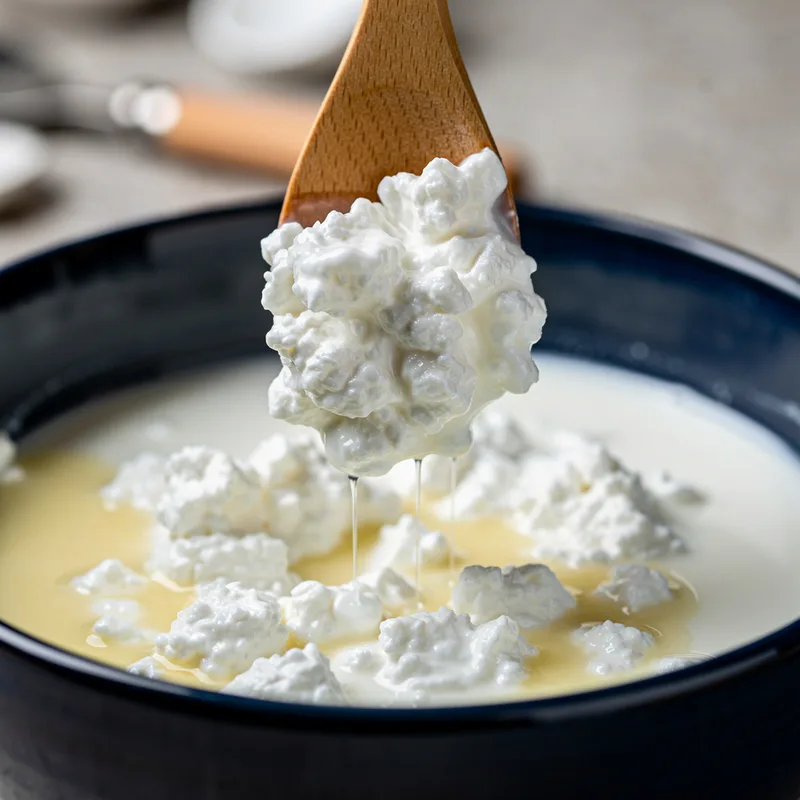
to coagulate
 8
7.7
8
7.7

- verb
- /koʊˈæɡjʊˌleɪt/
- Specialized
- When the blood flows from a wound, it will begin to coagulate to form a protective scab.
- coagulate tissue
- coagulate the curd
- coagulate the vessel
Loading YouTube…
Watch on YouTubeWell how that product will coagulate will coagulate very quick and in a bad way.
- Well how that product will coagulate will coagulate very quick and in a bad way.
Examples
-
It's lactic acids caused proteins to coagulate, binding into soft clumps.
-
Blood starts to coagulate in four minutes.
-
And we, we, we coagulate the proteins of eggs.
-
Then blood coagulates on the surface.
-
The blood had already coagulated.
-
A single molecule of this would be enough to coagulate the albumen of any living thing.
-
The orderly's feet plod through pools of blood that coagulate in cracks and crevices along the way.
Fiction book (1990) -
The digestive enzyme rennin coagulated the liquid milk proteins into solids.
-
When heated, the proteins in the egg will coagulate and become firm.
-
The chef used a special technique to coagulate the cream, turning it into a thick sauce.
Synonyms
 55
4.4
55
4.4
To change from a liquid or gas into a hard state as it cools
 35
2.3
35
2.3
Become or make something less runny
 13
4.1
13
4.1
To become thick and form small lumps, like milk when it turns sour
 11
6.6
11
6.6
To become thick and semi-solid like jelly when it cools
 4
5.3
4
5.3
To make a liquid become thick and form lumps, for example blood


 1
9.9
1
9.9
To form small clumps from tiny particles in a liquid
Antonyms

How Solid
55
4.4

- Specialized
8
7.7
11
6.6
- Specialized
1
4.1
35
2.3
Surface Forms
Morphology
coagulate = coagul + ate
Although the verb uses the productive suffix '-ate', the root 'coagul-' is a Latin combining form not a standalone English word and the meaning is technical, so learners cannot reliably derive the sense from known English bases.
Etymology
The word coagulate comes from Latin parts co- ('together') and agere ('to drive' or 'do'), the same root as in act. So to coagulate is to make parts come together into a thick or solid mass, like blood forming a clot.