
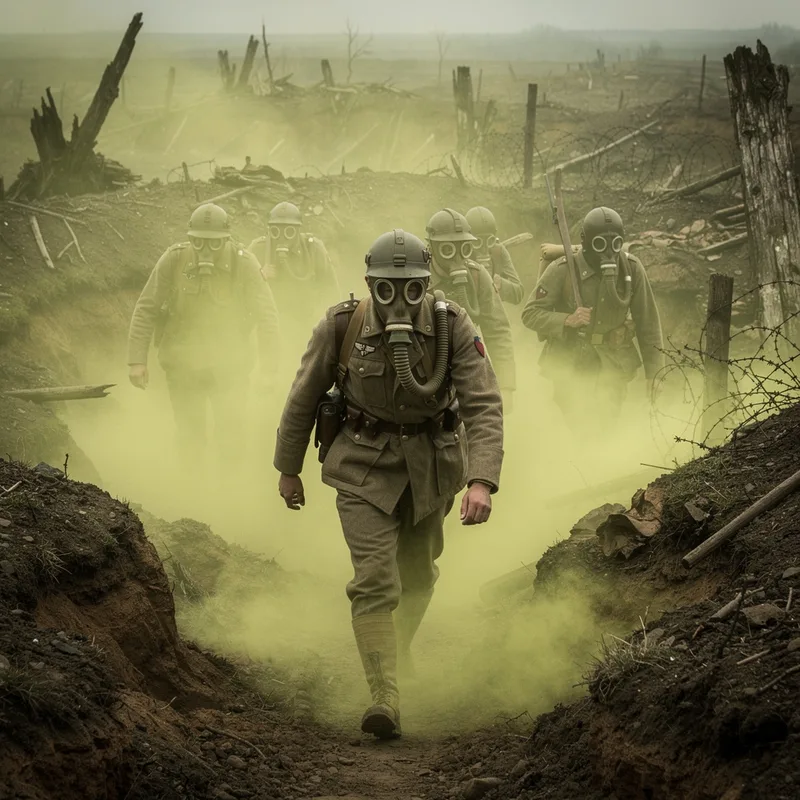
chemical warfare
 12
5.6
12
5.6

- noun
- /ˈkɛmɪkəl ˈwɔːrfɛr/
- Specialized
- Reports indicated that chemical warfare was utilized in recent conflicts, raising concerns about international law.
- chemical warfare agents
- biological and chemical warfare
Loading YouTube…
Watch on YouTubeThe intentional idea As abstruse as this sounds, the intentional idea of chemical warfare was not to kill.
- The intentional idea As abstruse as this sounds, the intentional idea of chemical warfare was not to kill.
- I would love for the AI crowd to take a leaf out of the book of the bio warfare, chemical warfare crowd.
- All you have now is going to be cyber warfare and biological and chemical warfare.
Examples
-
Due to the difficulties of fighting Yemeni royalists in their mountainous cave hideouts, the Egyptian military resorted to chemical warfare as early as June 1963.
Academic text (2017) -
Recently, they reportedly used chemical warfare in southwest Maputo, which killed four Mozambican soldiers and wounded 20 others.
Academic text (1992) -
But who knows what other things were in the air due to chemical warfare?!
Blog text (26) -
Then you know absolutely nothing about biological and chemical warfare, do you?
-
Which means, Nemerov just launched... the most massive attack in the history of chemical warfare.
-
Iraqi soldiers on the first line of defense had no chemical warfare suits or even gas masks.
Academic text (1991) -
During the Iraq-Iran war, chemical warfare agents (CWAs) were widely used against Iranian troops by the Iraqis.
Academic text (2007) -
In the case of Iraq, many scholars have characterized the state's Anfal campaign and the use of chemical warfare against the Kurdish town of Halabja during the Iran-Iraq war as genocide.
Academic text (2002) -
The use of chemical warfare in World War I resulted in devastating consequences for soldiers on both sides.
-
Many nations signed treaties to prohibit chemical warfare due to its horrific effects on human health.
Synonyms
 176
4.6
176
4.6
A harmful chemical that kills or hurts people, animals and plants in war
 12
5.7
12
5.7
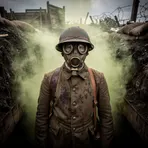
A harmful gas used as a weapon that can kill or make people very sick if they breathe it

Use of poisonous gas or chemicals in war to kill and hurt soldiers
How Widespread
- Specialized
12
5.6
 59
4.5
59
4.5
Surface Forms
Morphology
The meaning ('use of chemical substances as weapons in war') is directly and literally built from 'chemical' (relating to chemicals) + 'warfare' (methods of waging war). This compositional pattern is common and cross-linguistically transparent, so a B1 learner who knows both constituents will readily infer the meaning.
Etymology
Chemical warfare comes from World War I, when armies used poison gases that drifted into enemy trenches and made soldiers very sick or badly hurt. So chemical warfare links chemical (poison) and warfare (fighting) and now means 'to kill or seriously hurt people with chemical weapons'.