
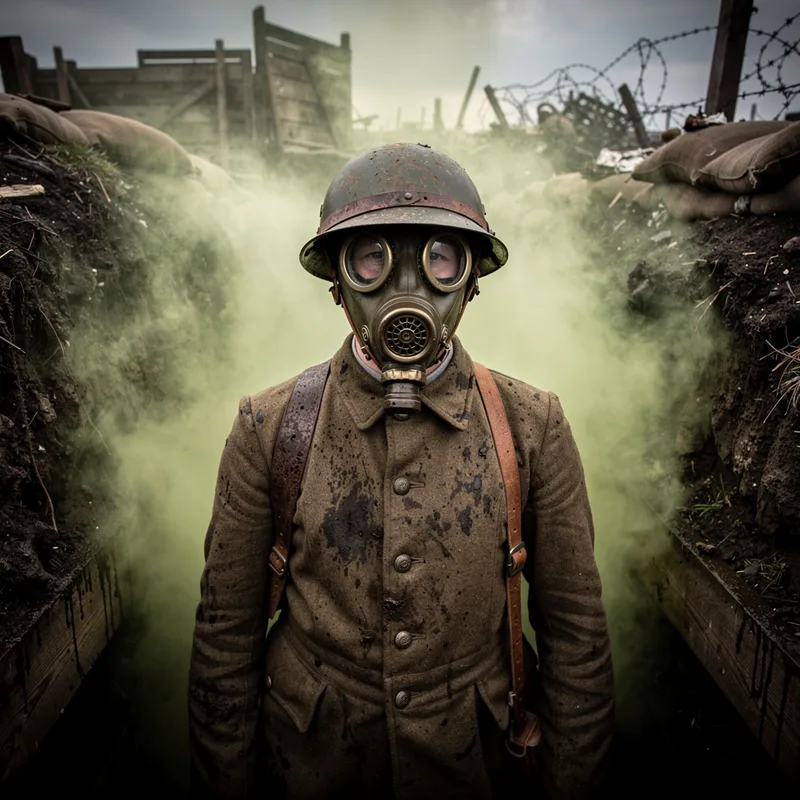
poison gas
 12
5.7
12
5.7

- noun
- /ˈpɔɪzən ɡæs/
- NSFW
- The soldiers were trained to identify and protect themselves against poison gas in case of an attack.
- use of poison gas
Examples
-
During World War I, the use of poison gas in battles caused severe injuries and led to many deaths.
-
We have created monitoring and inspection regimes to prevent the spread of nuclear weapons and poison gas while imposing penalties on those who violate global standards.
Academic text (1998) -
Enough poison gas to kill every man, woman, and child in San Francisco.
Fiction book (1996) -
The accusations of using poison gas fail for the same reasons as the other 'illegal weapons' claims.
Blog text (30) -
Some officer had the presence of mind to throw the switch for the poison gas siren.
Fiction book (1992) -
Chlorine was the first poison gas used in World War I, with terrible consequences and loss of life.
Blog text (34) -
Edgewood Arsenal is where they made poison gas during World War ll.
-
By that time, machine guns, artillery, and poison gas had turned miles of the country into a barren moonscape.
Academic text (2009) -
You admit that Saddam Hussein used poison gas against the Kurds.
Academic text (1995) -
We've just discovered that poison gas... is leaking from the old mines and for your own safety... we're evacuating the town.
Synonyms
 19
6.8
19
6.8
A very poisonous gas that stops people breathing, often used as a weapon
 13
8.8
13
8.8
A very poisonous chemical used as a weapon that stops the nerves from working and makes people stop breathing
 6
7.7
6
7.7
A poison gas used in war that causes painful blisters and damages the lungs
 3
7.9
3
7.9
A strong chemical spray used by police that makes people cry and cough
 1
9.9
1
9.9
A gas with no color that smells like cut hay and can kill people
 1
9.9
1
9.9
A very strong poison used as a weapon that attacks the nerves and can kill by touching skin or breathing
 1
9.9
1
9.9
A gas with no color that smells like almonds and is very poisonous

 1
9.9
1
9.9
A very strong chemical weapon that causes severe blisters and harms the lungs and eyes
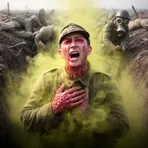
A very toxic gas used as a weapon that causes severe blisters and eye and lung damage

A poisonous chemical used in war that causes severe blisters and eye and lung damage
How Toxic
- NSFW
12
5.7
 15
6.0
15
6.0
Surface Forms
Morphology
The compound meaning 'a toxic gas' is directly and compositionally derived from 'poison' (a harmful substance) + 'gas' (a gaseous substance), so a learner who knows both words can infer the MWE. This straightforward noun–noun compounding is common cross-linguistically and follows regular English composition patterns, making it transparent to a B1 learner.
Etymology
The noun poison gas comes from the simple image of a poison in the form of a gas. The name became common when invisible gases were used in war and could make people very sick or die, so it means 'a toxic gas used to harm or kill people'.