

mustard agent


 1
9.9
1
9.9
- noun
- /ˈmʌstərd ˈeɪdʒənt/
- NSFW
- The military used the mustard agent in World War I, causing severe injuries to soldiers on the battlefield.
Examples
-
Egypt appears to have inherited stocks of phosgene and mustard agents left behind by British forces when their occupation of Egypt ended in 1954.
Academic text (2007) -
These stockpiles contain obsolete nerve gases and mustard agents in various munitions and containers.
Academic text (1995) -
Investigators found traces of mustard agent in the abandoned site, which raised concerns about chemical warfare safety.
-
During the training exercise, soldiers learned how to recognize the effects of exposure to mustard agent and how to respond.
Synonyms
 176
4.6
176
4.6
A harmful chemical that kills or hurts people, animals and plants in war
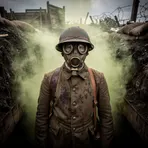 12
5.7
12
5.7
A harmful gas used as a weapon that can kill or make people very sick if they breathe it
 6
7.7
6
7.7
A poison gas used in war that causes painful blisters and damages the lungs

A poisonous gas, also called mustard gas, that causes severe skin blisters and lung damage

A poisonous chemical used in war that causes severe blisters and eye and lung damage
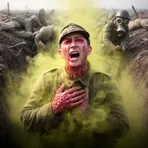
A very toxic gas used as a weapon that causes severe blisters and eye and lung damage

A harmful chemical that causes severe blisters on skin and damages eyes and lungs, often used as a weapon
Surface Forms
Morphology
mustard + agent
The headword 'agent' clearly marks a substance causing an effect, and 'mustard' signals some relation to mustard, so learners will likely infer it is a substance related to mustard. However, the specific technical sense — a highly toxic, blistering chemical warfare agent — is specialized and historically named, so the dangerous/warfare meaning is not fully predictable from everyday knowledge of 'mustard' and 'agent'.
Etymology
Mustard agent got its name from the smell and colour of the chemical, because early users said it smelled like mustard and looked yellow-brown. That's why the term came to mean a 'chemical weapon' that causes severe blisters and damages the eyes and lungs.