

blistering agent
- noun
- /ˈblɪstərɪŋ ˈeɪdʒənt/
- NSFW
- The laboratory is studying how a blistering agent breaks down in the environment after deployment.
Examples
-
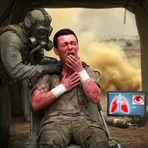
Exposure to a blistering agent during warfare can cause severe burns and long-term respiratory problems.
-
Mustard gas is the most infamous blistering agent used in chemical warfare history.
-
The military used a blistering agent during the conflict.
-
Many soldiers suffered from exposure to blistering agents.
-
The military warned soldiers about the dangers of a blistering agent used in chemical warfare, which can severely harm the skin.
-
During the training session, they demonstrated how to identify a blistering agent and the precautions necessary to avoid exposure.
-
Authorities issued a safety alert regarding a blistering agent found in illegal munitions that could cause serious injuries to civilians.
Synonyms

 6
7.7
6
7.7

A poison gas used in war that causes painful blisters and damages the lungs

 1
9.9
1
9.9
A very strong chemical weapon that causes severe blisters and harms the lungs and eyes

A poisonous chemical used in war that causes severe blisters and eye and lung damage

A very toxic gas used as a weapon that causes severe blisters and eye and lung damage

A substance that causes blisters on the skin and inside the mouth or nose
Surface Forms
Morphology
The meaning is directly compositional: 'blister' (to cause raised fluid-filled bubbles) combined with 'agent' (a substance causing an effect) yields a substance that causes blisters. Although it is a technical/weaponized term, the adjective-from-verb + agent-noun pattern is transparent and a B1 learner who knows both constituents can infer the general meaning.
Etymology
Blistering agent comes from a simple picture: blistering means making blisters and agent is the thing that does it, so it describes a chemical that makes the skin form painful blisters. So the term is used for a toxic chemical used as a 'chemical weapon' that causes blisters and can damage the eyes and lungs.