

sulfur mustard
- noun
- /ˈsʌlfər ˈmʌstərd/
- NSFW
- Exposure to sulfur mustard can cause severe skin burns.
Examples
-
Despite international bans, some reports suggest that sulfur mustard has been used in recent conflicts.
-
Exposure to sulfur mustard can result in severe blistering and long-term respiratory problems.
-
The army was trained to recognize the distinct smell of sulfur mustard during chemical warfare drills.
-
The military used sulfur mustard during World War I.
-
The military reported that the enemy used sulfur mustard in the recent conflict, leading to numerous injuries.
-
Chemists are studying the effects of sulfur mustard on human health to better understand its long-term impacts.
-
During World War I, sulfur mustard was notorious for causing painful blisters on soldiers exposed to it.
Synonyms

 6
7.7
6
7.7

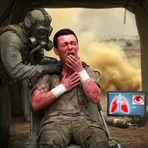
A poison gas used in war that causes painful blisters and damages the lungs

 1
9.9
1
9.9
A very strong chemical weapon that causes severe blisters and harms the lungs and eyes

A very toxic gas used as a weapon that causes severe blisters and eye and lung damage

A poisonous gas, also called mustard gas, that causes severe skin blisters and lung damage

A harmful chemical that causes severe blisters on skin and damages eyes and lungs, often used as a weapon
Surface Forms
Morphology
sulfur + mustard
Although the constituents 'sulfur' and 'mustard' are familiar words, their combination denotes a specific, technical vesicant chemical (mustard gas) used as a warfare agent; a B1 learner would not be able to infer toxicity, blistering effects, or military use from the literal words. The term is conventionalized and domain-specific rather than compositionally predictable, so its full meaning is not derivable from the parts.
Etymology
Sulfur mustard got its name from two simple things: it contains sulfur and early soldiers said it smelled like mustard or garlic, so they called it 'mustard gas'. That strong image of sulfur plus a mustard-like smell explains why the name now means the dangerous poison that causes severe blisters and harm in war.