

cataclysm
 19
9.2
19
9.2

- noun
- /ˈkætəˌklɪzəm/
- The earthquake was a devastating cataclysm that destroyed entire neighborhoods.
- natural cataclysm
- great cataclysm
Loading YouTube…
Watch on YouTubeBut then there was a cataclysm of some kind.
- But then there was a cataclysm of some kind.
- And you know, interesting art happens usually after a cataclysm or a war.
- As I said, I would emphasize crisis or change or cataclysm.
- And that they were brought to Egypt to be preserved during the last cataclysm.
- Like you can actually get off before, you know, the cataclysm.
- According to the Edfu texts, this this notion of of seven survivors of the cataclysm is pretty widespread.
- Covenants often follow cataclysm for a way forward for these local communities, right?
- It doesn't seem like it seems like they'd be smart enough to avoid some sort of Astro astronomical cataclysm from an asteroid or a comet.
- We have been through this cataclysm of the Holocaust, First World War, Holocaust, war, communism, mass murder, right?
- But if everyone tries to do that, what a cataclysm.
- And the business as usual is a is a prescription or cataclysm for the American middle class.
- And he he talks about like real proper, proper cataclysms, like mega, mega airline disasters and things like that.
- What we have in the case of the Drowned World is a cataclysm that has been going on now for really generations.
Examples
-
Oh, usually a natural cataclysm... a freeze, a flood, a big rain.
-
What we have in the case of the Drowned World is a cataclysm that has been going on now for really generations.
-
And you know, interesting art happens usually after a cataclysm or a war.
-
The greatest cataclysm in history.
-
But then came a great cataclysm from outer space.
-
We are the first species smart enough to grasp the cataclysms of the past.
Academic text (1992) -
How will we react to potential cataclysms of the future?
Academic text (1992) -
We are on the verge of a devastating cataclysm!
-
There has been no lack of imagination in devising models that might explain the cataclysm.
Academic text (2003) -
What followed Gromov's exit grew rapidly into a cataclysm for the Soviets and a national disaster for the Afghans.
Academic text (2001)
Synonyms
 ∞
1.0
∞
1.0
A sudden event that causes great damage, loss, or failure
 915
3.0
915
3.0
A very sad event that causes much suffering and loss
 810
4.1
810
4.1
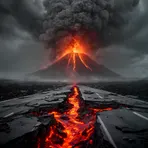
A sudden large change in a country's government or society, often when people rise against leaders
 176
7.0
176
7.0
A sudden terrible event that causes great damage and suffering
 134
8.6
134
8.6
A great disaster that destroys the world, often caused by a divine power
 95
5.8
95
5.8
A sudden total failure that causes serious damage to a system
 90
4.8
90
4.8
Great destruction that leaves places badly damaged, for example after a war or storm
 60
3.7
60
3.7
A situation that seems like a disaster but is often not as bad
 51
6.9
51
6.9
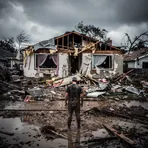
A sudden big change that causes confusion and problems
 49
6.7
49
6.7
A terrible event that causes much harm and suffering
 31
9.6
31
9.6
Very large destruction that causes many deaths, often from fire or war
 18
4.6
18
4.6
A sudden major change that shocks and upsets a group or system
 4
4.3
4
4.3
A sudden violent outburst of feeling or action
 3
7.5
3
7.5
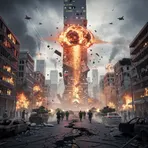
A sudden violent disturbance in a country or society
 1
9.4
1
9.4
A very large battle or event that causes great damage to many people and places
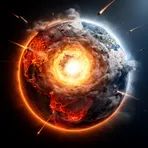
An event that kills most people or destroys life on Earth
Antonyms


How Destructive

Surface Forms
Morphology
cataclysm = cata + clysm
The parts are Greek combining forms (cata- + -clysm) not familiar standalone English words, so learners cannot reliably derive the meaning from the components.
Etymology
The word cataclysm comes from a Greek word meaning a great 'flood': kata- means 'down' and klysmos means 'a washing' or 'flood'. So a cataclysm is like a huge wash that suddenly destroys or changes everything.