
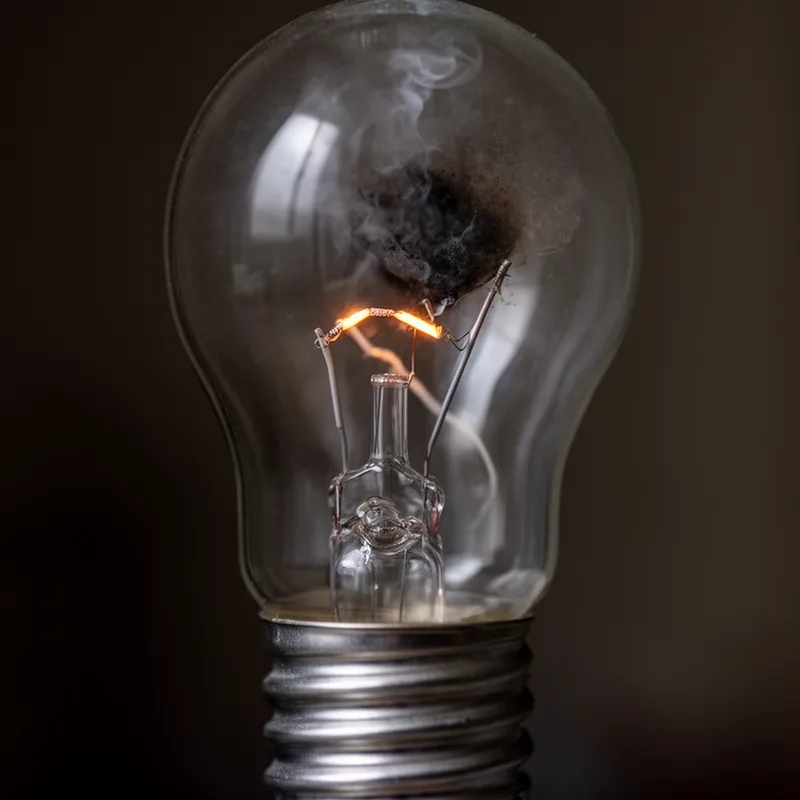
to burn out
 24
4.7
24
4.7

- phrasal verb
- /bɜrn aʊt/
- If you leave the light on too long, the bulb will burn out and stop working.
Examples
-
The fuse will burn out in 95 seconds.
-
Uneven wear on hammers throws the rotor out of balance and can burn out the bearings.
Academic text (2000) -
People who come in and seem too excited for the morning, they burn out so fast.
-
We'll have to let this thing burn out before we even think about moving back in.
-
I want to run longer, but I always burn out in a little over a minute.
Blog text (27) -
Nurse Johnson cares too much about her job and is going to burn out.
Fiction book (1996) -
Well, maybe one of the light bulbs burned out.
-
They blaze brightly, then quickly burn out.
-
The fuse in the old electrical system will burn out if it overheats.
-
Make sure to turn off the heater; otherwise, it will eventually burn out from continuous use.
Synonyms
 ∞
3.5
∞
3.5
To break suddenly because of pressure or too much electricity
 50
3.7
50
3.7
Make something too hot so it can be damaged
 45
4.1
45
4.1
To stop working suddenly
 27
3.7
27
3.7
To be completely destroyed by fire
 26
4.1
26
4.1
Stop working because of too much electricity or heat
 19
2.7
19
2.7
To make a person very tired or a thing stop working by using it too much
 12
6.9
12
6.9
Lose control emotionally or fail completely because it gets too hot
 6
7.5
6
7.5
To fail suddenly after a good start
Antonyms


How Damaged

Surface Forms
Morphology
The sense 'to stop working because of damage/overheating' can be partially inferred from 'burn' (to be damaged by heat) combined with 'out' (no longer functioning), so there is a visible compositional link. However, the specific technical extension to electrical/mechanical failure is somewhat conventionalized and not fully predictable for a B1 learner without prior exposure, making it only partially transparent.
Etymology
The verb burn out comes from the image of the thin wire inside a light bulb: the wire burns and the light goes out. When that part is 'burned out', it can no longer work, so burn out means 'to stop working' because of heat or too much use.