

to belay
 4
9.1
4
9.1

- verb
- /bɪˈleɪ/
- Specialized
- Before climbing, it is important to belay the rope securely to prevent any accidents.
- belay the careful climber
- rope to belay
- belayed when climbing
Examples
-
Yeah, I'll get a rope, I'll belay you.
-
When I was belaying, it seemed so obvious to me what route the climbers should take, where they should put their hands and feet.
Blog text (4) -
The rest of us realised what we were doing and circled round behind and, instead of pulling, started belaying.
-
We were still roped together, belayed only by the other climber.
Fiction book (1996) -
I prayed that the single piton I had hammered into the rock would belay his fall.
Fiction book (1996) -
The instructor taught us how to belay properly to keep our partners safe during the climb.
-
When he reached the top, he carefully belayed his friend to ensure a safe ascent.
Synonyms
 923
1.0
923
1.0
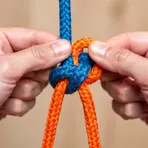
To fasten things together by making a knot with string or rope
 132
3.2
132
3.2
To tie something tightly with rope or string
 88
1.6
88
1.6
To fasten a belt or strap with a clasp
 74
2.2
74
2.2
Fasten something with rope so it cannot move
 51
3.4
51
3.4
To hold something in place so it does not move
 23
4.4
23
4.4
To tie an animal or object so it cannot move away
 14
4.7
14
4.7
To fasten something securely with rope or cord
 11
1.0
11
1.0
To tie or secure something with a strong cord
 5
4.0
5
4.0
To fasten something with rope or straps to keep it from moving
 4
7.0
4
7.0
To tie the legs and wings of a bird so it cooks evenly
 3
3.0
3
3.0
To fasten something with a small hook or buckle

 1
3.2
1
3.2
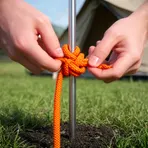
Fasten a rope or string so it does not come loose
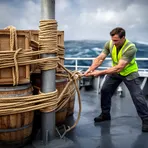
To tie something tightly with rope so it does not move

To tie a rope to a metal or wooden fitting to hold it in place

To pull something up or fasten it with a rope on a ship
Compounds
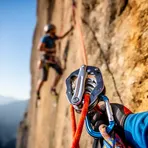
- Specialized
A climbing tool that automatically locks and stops the rope if a climber falls
How Secure

Surface Forms
Morphology
Etymology
The verb belay comes from the parts be- and lay ('to put down'), so it originally meant to make a rope lie fast. Sailors used this word for tying ropes on a ship, and that is why to belay today means to tie or secure a rope for safety.