

to bind
 132
3.2
132
3.2

- verb
- /baɪnd/
- To repair the fence, they decided to bind the loose posts with sturdy twine.
- bind tightly
- bind together
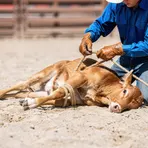
- bind the calves
Loading YouTube…
Watch on YouTubeThe second robber says let's not kill him, let's bind him, take his wallet and throw him in a ditch.
- The second robber says let's not kill him, let's bind him, take his wallet and throw him in a ditch.
Examples
-
And her feet are bound with a rope.
-
Tie it together, while saying, "With these knots, I bind you to this purpose."
-
They then seize him, bind him and speed away.
-
The kimono is wrapped over them and then folded and bound in the same way.
Academic text (1999) -
Still, even with the leash tightly bound, she was bleeding badly.
Academic text (2011) -
The wooden stilts, tightly bound in red cloth, are padded on the end.
Academic text (1999) -
She had to bind the broken branches together with rope to keep the tree upright.
-
The climber used strong cords to bind his gear tightly to his backpack.
Synonyms
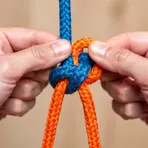 923
1.0
923
1.0
To fasten things together by making a knot with string or rope
 74
2.2
74
2.2
Fasten something with rope so it cannot move
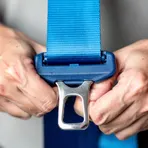 68
1.6
68
1.6
Hold something in place so it cannot move
 55
1.0
55
1.0
To close something by moving a sliding tab that joins two rows of teeth
 47
3.3
47
3.3
Fasten something tightly to keep it from moving
 35
1.9
35
1.9
To tie things together with a thin cord
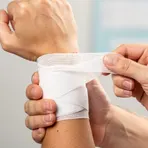 34
2.7
34
2.7
To wrap a wound with soft material to protect or support it
 30
3.3
30
3.3
To tie things together with a loop of material
 24
1.0
24
1.0
To thread a cord through holes to fasten shoes
 23
4.4
23
4.4
To tie an animal or object so it cannot move away
 14
4.7
14
4.7
To fasten something securely with rope or cord
 11
1.0
11
1.0
To tie or secure something with a strong cord
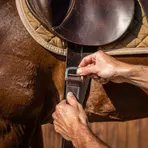 8
5.5
8
5.5
To fasten a strap tightly so it does not slip
 5
1.0
5
1.0
To tie rope or string so it holds
 5
4.0
5
4.0
To fasten something with rope or straps to keep it from moving
 4
7.0
4
7.0
To tie the legs and wings of a bird so it cooks evenly
 4
9.1
4
9.1
To tie a rope to something to hold it for safety, for example when climbing or docking a boat
 4
9.3
4
9.3
To tie the arms and legs of a person or animal so they cannot move
 3
3.0
3
3.0
To fasten something with a small hook or buckle
 3
6.1
3
6.1
To bind things with a thin rope or string
 3
8.4
3
8.4
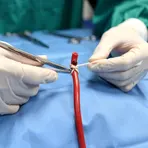
To tie a blood vessel to stop bleeding
 1
4.4
1
4.4
To tie things together with rope to hold them in place
 1
4.8
1
4.8
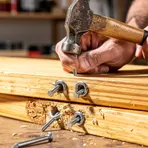
To bend the end of a nail to hold things together
 1
8.1
1
8.1
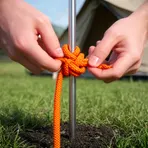
To make a loop of rope with a knot that tightens to catch animals or hold something

 1
3.2
1
3.2
Fasten a rope or string so it does not come loose

To tie something tightly with rope so it does not move

To tie a rope to a metal or wooden fitting to hold it in place

To fasten someone's shoe laces so they do not come loose
Antonyms


Idioms

Phrasal Verbs

- Jargon
2
9.8
To order a defendant to be kept in custody or to obey certain rules until a later court hearing
Compounds

- Specialized
2
8.1
A situation where you are given two conflicting demands you cannot satisfy, often from someone in charge
How Tight

Surface Forms
Etymology
Bind (verb, tie) comes from an old English word that meant 'to tie' and is related to words like bandage and band. So to bind something is to wrap or fasten it tightly.