

beech tree
 1
3.0
1
3.0

- noun
- /biːtʃ triː/
- Soon enough, a doe wandered between two beech trees.
- copper beech tree
- huge beech tree
- old beech tree
Examples
-
Almost at once, she smiled; she'd spotted the singer, a rose-breasted grosbeak, high in a tossing beech tree full of flowers.
Fiction book (1998) -
At last he pulled off the road and stopped the horses in a small glade that was hidden from the road by a stand of graceful beech trees.
Fiction book (1999) -
That huge tree that is dwarfing our house is a European beech tree.
Blog text (11) -
Maggie told the gardener to bury the puppy under the beech tree.
Fiction book (1992) -
They halted at last, where several other wolves sat on their haunches at the foot of a tall beech tree.
Fiction book (1995) -
There was a courtyard behind the house with an empty fountain, and huge beech trees ringed a slate-roofed gazebo.
Fiction book (1999) -
Oak trees transformed into orange torches, the maples turned blood-red, and the beech trees became yellow, then as now.
Fiction book (1993) -
The three streets intersecting at its core were lined with beech trees, wood benches, and storefronts that were as inviting in winter white as they were now in May.
Fiction book (2002) -
The children climbed the thick branches of the old beech tree in the park.
-
In the autumn, the leaves of the beech tree turn a vibrant golden color.
Synonyms
 5
4.3
5
4.3
A large tree with smooth grey bark and small nuts you can eat

A North American tree that loses its leaves in autumn, with smooth gray bark and edible nuts

A large tree that loses its leaves in winter with smooth gray bark and small toothed leaves

A large European tree often planted in parks with smooth gray bark and leaves with small teeth
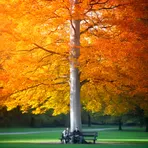
A large European tree with smooth grey bark and bright autumn leaves that people plant for shade in parks

A North American tree with light green leaves and nuts you can eat

A beech tree from eastern North America with smooth bark and nuts people and animals eat

A North American tree with light green leaves and edible nuts
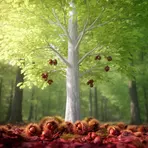
A North American forest tree with light green leaves and edible nuts
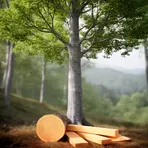
A tree from Japan with soft, light yellow-brown wood
How Big

Surface Forms
Morphology
The meaning is directly and transparently derived from combining 'beech' (a specific type of tree) with 'tree' (a tall perennial plant); it is a straightforward species name with no idiomatic or metaphorical shift. Such noun+noun compounding for species is cross-linguistically common, so a B1 learner who knows both constituents will understand the MWE.
Etymology
Beech tree is a plain name that joins beech (the tree that makes small edible nuts) and tree, so it gives a clear picture of the plant. That's why it simply means 'a tree of that kind'.