
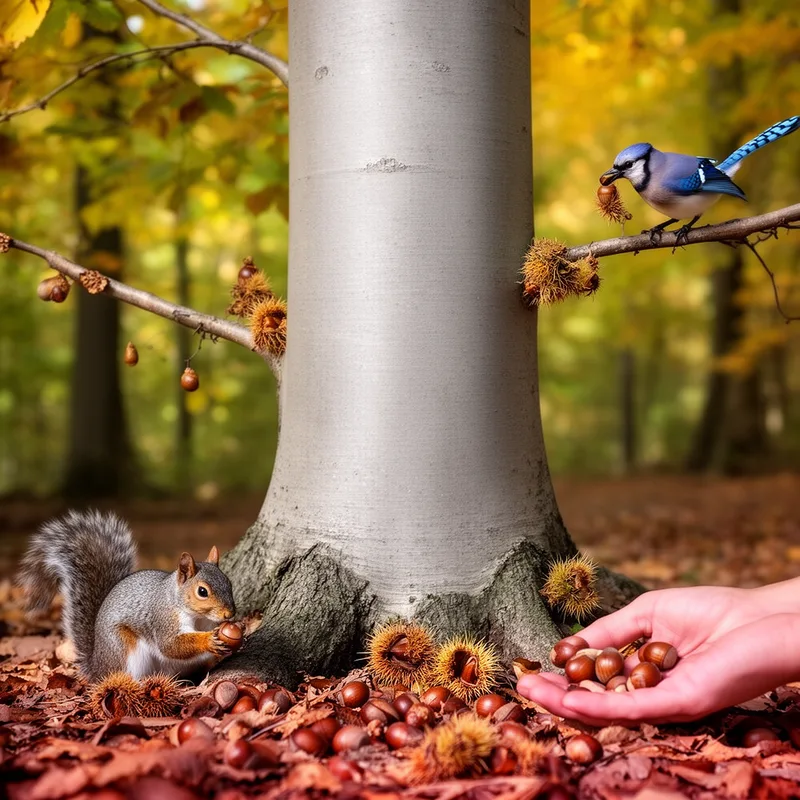
Fagus grandifolia
- noun
- /ˈfeɪɡəs ˌɡrændɪˈfoʊliə/
- Specialized
- The Fagus grandifolia is an important species in eastern North American forests.
Examples
-
Many animals rely on the fruit of Fagus grandifolia as a food source in autumn.
-
He collected nuts from a mature Fagus grandifolia to plant in his garden.
-
The Fagus grandifolia is known for its beautiful foliage.
-
Many parks feature the majestic Fagus grandifolia trees.
-
In the fall, the leaves of the Fagus grandifolia turn a stunning golden color.
-
The nuts from the Fagus grandifolia are a favorite treat for squirrels.
-
You can find a Fagus grandifolia tree in many North American forests, providing shade during the hot summer months.
Synonyms

A North American tree that loses its leaves in autumn, with smooth gray bark and edible nuts

A North American tree with light green leaves and nuts you can eat

A North American tree with light green leaves and edible nuts
A North American forest tree with light green leaves and edible nuts
Surface Forms
Morphology
Fagus + grandifolia
The binomial is compositionally transparent in botanical Latin: Fagus = beech and grandifolia literally means ‘large‑leaved’ (grandi- large + folia leaves), so the name describes a beech with large leaves. However, these are Latin morphemes rather than everyday English words and a typical B1 learner will not reliably know or recognize botanical Latin epithets, so the meaning is only partially accessible without specialized knowledge.
Etymology
Fagus grandifolia comes from Latin words: Fagus means 'beech' and grandifolia means 'large leaves', so the name paints a simple picture of a beech tree with big leaves. That's why this name is used for the North American beech tree with light green leaves and nuts people can eat.

