
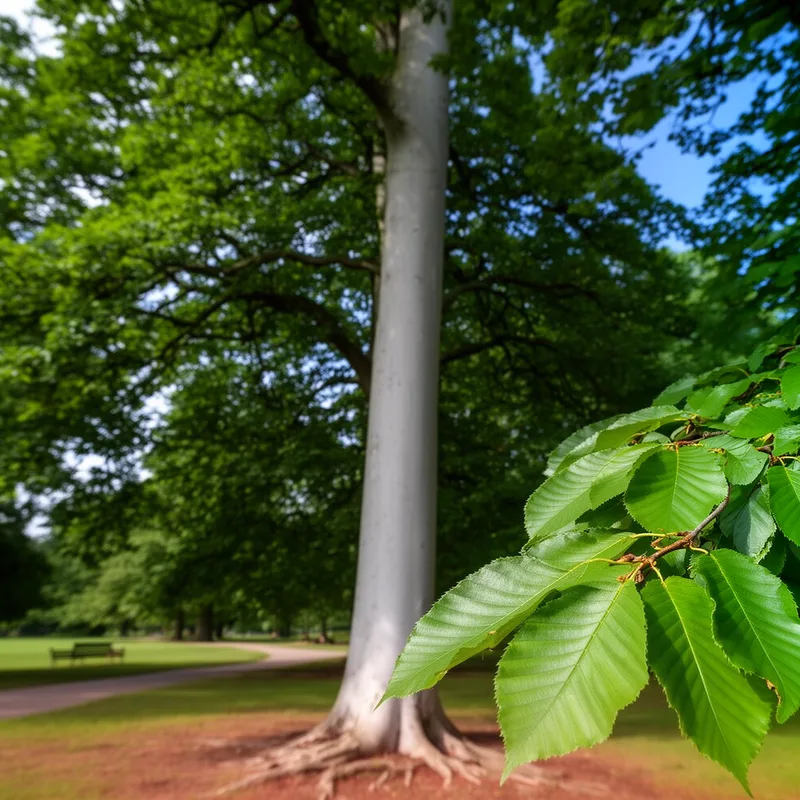
Fagus sylvatica
- noun
- Specialized
- The distinctive smooth gray bark helps identify Fagus sylvatica among native species.
Examples
-
Many parks in North America feature Fagus sylvatica as a decorative shade tree.
-
The Fagus sylvatica in her garden is over a hundred years old.
-
Look at that Fagus sylvatica!
-
The Fagus sylvatica tree is stunning.
-
Many parks in North America feature Fagus sylvatica as a decorative shade tree.
-
The distinctive smooth gray bark helps identify Fagus sylvatica among native species.
-
The Fagus sylvatica in her garden is over a hundred years old.
Synonyms
A large European tree with smooth grey bark and bright autumn leaves that people plant for shade in parks

A large tree that loses its leaves in winter with smooth gray bark and small toothed leaves
Surface Forms
Morphology
Fagus + sylvatica
The name is the standard Latin binomial: genus 'Fagus' (beeches) + species epithet 'sylvatica' (from Latin sylvaticus, 'of the woods'), so a learner who knows both constituents can infer it denotes a woodland beech. Binomial scientific names are compositional and consistent across languages, making this meaning predictable from the parts (though the second element is Latin and may be unknown to many learners).
Etymology
Fagus sylvatica comes from Latin words. Fagus meant 'beech' and sylvatica meant 'of the woods', so the name means 'beech of the woods' and is used for the beech tree that grows in forests and parks.

