
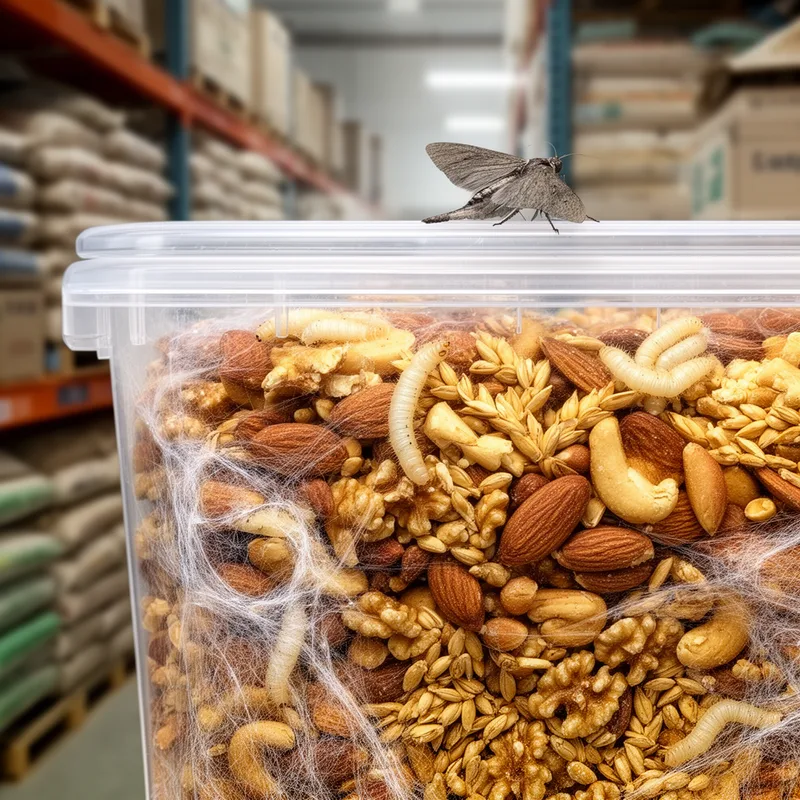
almond moth
- noun
- /ˈɑlmənd mɔθ/
- Specialized
- The larvae of the almond moth produce webbing that contaminates nuts and dried fruit.
Examples
-
The warehouse manager discovered an infestation of almond moth larvae in the grain storage area.
-
Almond moth infestations can cause significant economic losses to stored products.
-
The almond moth can damage stored nuts.
-
Have you seen an almond moth before?
-
The larvae of the almond moth infest stored nuts and grains, leading to significant waste.
-
Infestations of the almond moth can ruin entire shipments of dried fruits and nuts.
-
The almond moth is known for damaging various stored plant products, including grains and nuts.
Synonyms
A small moth whose young eat stored grains and nuts and make silk webbing

A small moth whose caterpillars make silk tunnels and eat stored food
A small moth whose young eat tobacco and other dried plant foods in storage and damage them

A small moth whose larvae eat stored flour and grain

A small moth whose young eat and damage stored grain and flour

A small moth whose caterpillars eat stored grain and flour
A small moth whose young eat and damage stored grain
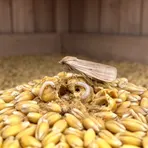
A small insect whose young eat kernels of stored grain
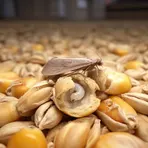
A small moth whose larvae eat stored grains like wheat or corn and damage them
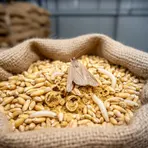
A small moth whose young eat and damage stored grain

A small insect whose caterpillars eat stored grain and damage food
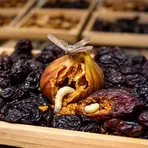
A small insect whose caterpillars eat and damage dried fruit

A small moth whose caterpillars eat dried fruit and cereals

An insect whose caterpillars eat and make webs in dried figs and other stored fruits

A group of moths that often damage crops and stored grain
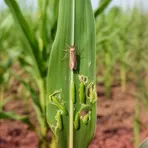
A small flying insect with a thin body and long legs whose caterpillars eat crops
Surface Forms
Morphology
This is a straightforward noun–noun compound where the meaning can be derived from 'almond' (a type of nut) + 'moth' (an insect); a B1 learner who knows both words will infer it is a moth associated with almonds (e.g., that infests or damages them). The compositional pattern is common cross-linguistically and follows standard English compound noun formation, so the sense is immediately comprehensible.
Etymology
Almond moth may come from the insect's habit of being found in stores of almonds and other nuts. Its larvae live in and spoil stored nuts and grains, so the name shows what this little moth does today.

