

Cadra cautella
- noun
- Specialized
- The larvae of Cadra cautella produce silk webbing that contaminates food products.
Examples
-
Warehouse managers are concerned about infestations of Cadra cautella in stored grain.
-
Proper storage techniques can help prevent Cadra cautella from damaging dried fruits and nuts.
-
The Cadra cautella is a common pest in many kitchens.
-
Farmers often struggle with Cadra cautella infestations.
-
The larvae of Cadra cautella can damage stored grains by creating webbing that contaminates the food.
-
Proper storage methods are essential to prevent Cadra cautella from infesting nuts and dried fruits.
-
Many farmers report that Cadra cautella infestations lead to significant losses in their grain supplies.
Synonyms

A small moth whose caterpillars eat and make webs in stored nuts and grain

An insect whose caterpillars eat and make webs in dried figs and other stored fruits
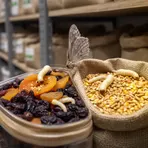
A small moth whose caterpillars eat dried fruit and cereals
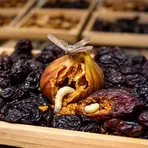
A small insect whose caterpillars eat and damage dried fruit

A small insect whose caterpillars eat stored grain and damage food
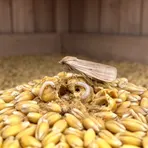
A small insect whose young eat kernels of stored grain
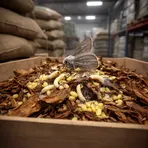
A small moth whose young eat tobacco and other dried plant foods in storage and damage them

A small insect whose young eat tobacco and other dried plants

A small moth whose larvae eat and damage dried plant goods like cacao beans and tobacco
Surface Forms
Morphology
Cadra + cautella
This is a Latin binomial (scientific) name rather than a compositional English phrase; its meaning (a particular storage-moth species) cannot be derived from the constituent tokens. One element is not found in the dictionary and even knowing 'Cadra' as a genus does not let a B1 learner infer the specific species’ meaning, so the expression is idiomatic/lexicalized and not transparently interpretable.
Etymology
Cadra cautella is the name scientists use for a small moth whose larvae eat stored grains, nuts and dried fruit and leave silk webbing. Picture tiny caterpillars weaving threads over jars in a pantry; that image helps you remember it is a pest that 'infests' stored food.

