

Anagasta kuehniella
- noun
- Specialized
- Stored flour was ruined by the larvae of Anagasta kuehniella.
Examples
-
Effective pest control is needed to prevent Anagasta kuehniella infestations in grain silos.
-
The presence of Anagasta kuehniella is a serious concern for food storage facilities.
-
The Anagasta kuehniella is known for infesting flour.
-
Farmers often struggle with Anagasta kuehniellas in their grain storage.
-
The larvae of Anagasta kuehniella caused significant damage to the stored grain.
-
To protect the flour from Anagasta kuehniella, proper storage methods must be employed.
-
Food storage managers need to monitor for Anagasta kuehniella to avoid infestations.
Synonyms
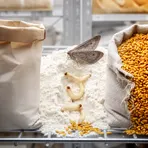
A small moth whose larvae eat stored flour and grain

A small moth whose caterpillars eat stored grain and flour

A small insect whose caterpillars eat stored grain and damage food
Surface Forms
Morphology
Anagasta + kuehniella
The name is a Latin binomial: 'Anagasta' is a genus known for flour‑infesting moths, so combining it with a species epithet signals a specific moth of that genus. However 'kuehniella' is an opaque species epithet with no independent, predictable English meaning; understanding relies on knowledge of taxonomic naming rather than normal compositional semantics, so the relation is only partially transparent to learners.
Etymology
Anagasta kuehniella may have been named by a scientist, and the part kuehniella likely honours the researcher Kuehn who first described this tiny moth that lives on stored food. Picture small moths and their 'larvae' crawling through a sack of 'flour' and eating it, and that image explains why the name means a pest of 'stored grain' today.

