
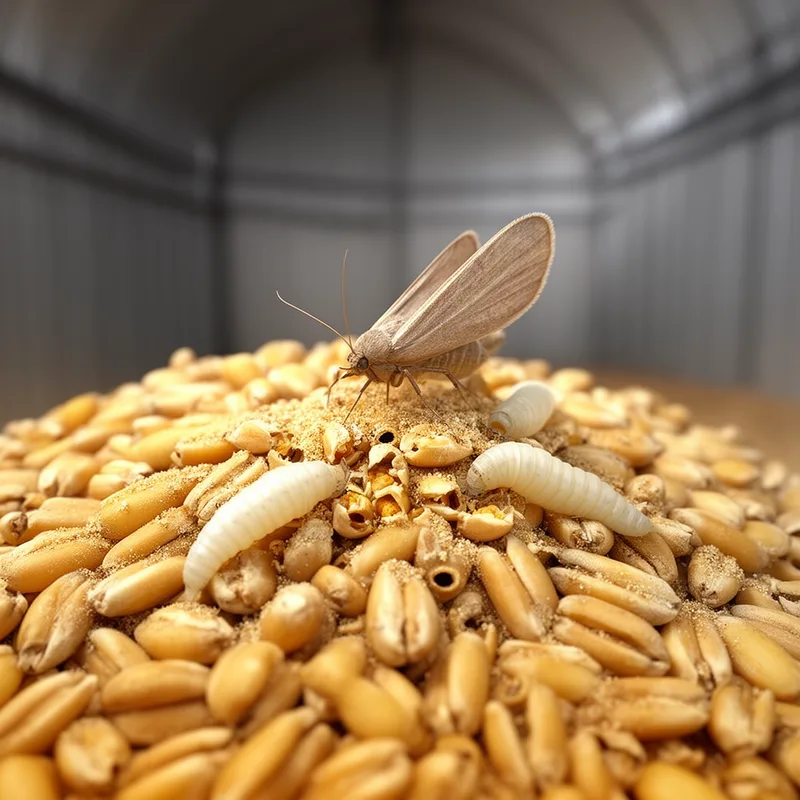
Sitotroga cerealella
- noun
- Specialized
- The infestation of Sitotroga cerealella can result in significant losses of stored wheat.
Examples
-
The Sitotroga cerealella larvae can cause significant damage to stored grains.
-
Research has focused on natural predators that can control Sitotroga cerealella populations in silos.
-
Farmers must inspect their grain regularly to detect the presence of Sitotroga cerealella.
-
Farmers must protect their crops from Sitotroga cerealella infestations.
-
The infestation of Sitotroga cerealella can result in significant losses of stored wheat.
-
Farmers must inspect their grain regularly to detect the presence of Sitotroga cerealella.
-
Research has focused on natural predators that can control Sitotroga cerealella populations in silos.
Synonyms
A small insect whose young eat kernels of stored grain
A small moth whose larvae eat stored grains like wheat or corn and damage them
Surface Forms
Morphology
Sitotroga + cerealella
This is a Linnaean binomial combining a genus name and a species epithet: if a learner knows 'Sitotroga' as a genus of grain‑damaging moths and recognises 'cerealella' as related to 'cereal', they can infer it refers to a moth associated with cereals. However, Latinised scientific names are technical and unfamiliar to most B1 learners, so the exact referent and ecological sense are not fully predictable without domain knowledge.
Etymology
Sitotroga cerealella may come from old Greek and Latin words: sito- 'grain', troga 'to gnaw', and cerealella 'small cereal'. The name creates a clear image of tiny moth larvae that eat into stored grain, so it fits the moth that damages cereal crops.

