
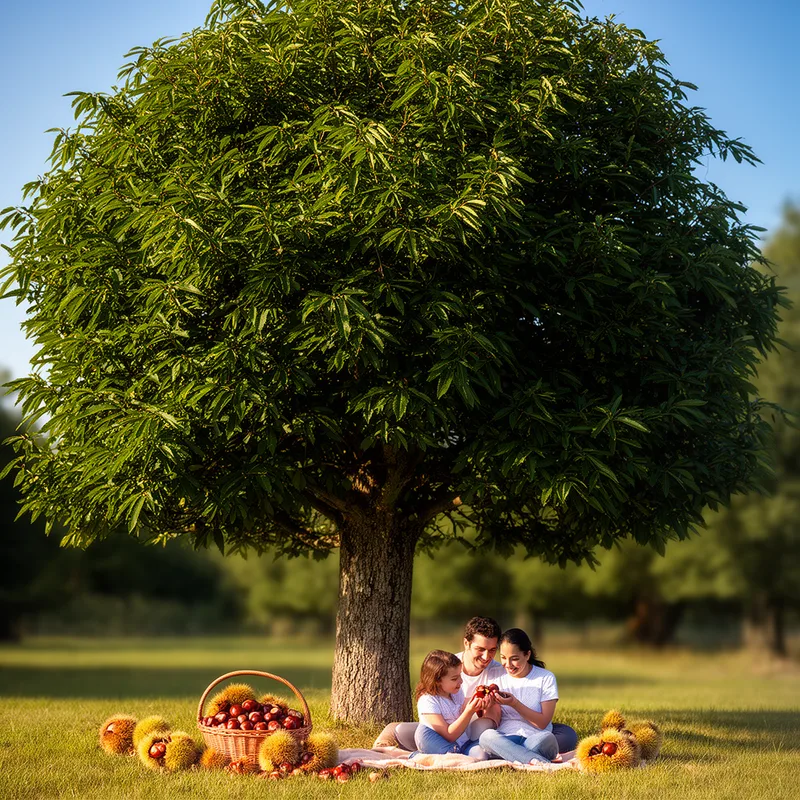
Spanish chestnut
- noun
- UK
- The Spanish chestnut is prized for its sweet, edible nuts sold in many European markets.
Examples
-
They planted a Spanish chestnut in the garden for its beautiful foliage and shade.
-
Roasted Spanish chestnuts are a traditional treat during the winter holidays in Italy.
-
The Spanish chestnut tree can grow up to 30 meters tall.
-
Many people enjoy the rich flavor of Spanish chestnuts in autumn.
-
Roasted Spanish chestnuts are a traditional treat during the winter holidays in Italy.
-
The Spanish chestnut is prized for its sweet, edible nuts sold in many European markets.
-
Many people enjoy the rich flavor of Spanish chestnuts in autumn.
Synonyms

 3
2.3
3
2.3

A large tree that makes nuts you can eat in prickly cases and has leaves that turn brown in autumn
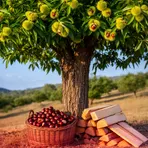
A tree that makes sweet, edible nuts and useful wood
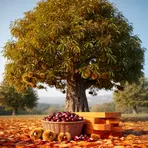
A large tree that loses its leaves and produces sweet edible nuts and useful wood

A large tree that loses its leaves and makes nuts you can eat and good wood
Surface Forms
Morphology
The phrase 'Spanish chestnut' is compositionally transparent: 'Spanish' (from Spain) modifies 'chestnut' (the tree/nut), so the meaning — a chestnut species or nut associated with Spain — is directly derivable from the constituents. This demonym + noun pattern is cross-linguistically common and follows standard adjective–noun composition, so an average B1 learner who knows both words will understand it.
Etymology
Spanish chestnut may come from the simple fact that sellers and cooks long ago sold the sweet chestnut nuts that came from Spain and nearby lands, so people began to call that kind 'Spanish'. So today Spanish chestnut means that particular 'tree' or edible 'nut'.