

sweet chestnut
- noun
- /swit ˈʧɛstnʌt/
- UK
- The leaves of the sweet chestnut are long and serrated, making the tree easy to identify.
Examples
-
We harvested some sweet chestnuts from the orchard last fall.
-
The sweet chestnut is commonly planted in parks for its broad, spreading branches.
-
Many European desserts use the nuts from the sweet chestnut as a main ingredient.
-
The sweet chestnut tree can grow up to 35 meters tall.
-
Many European desserts are made with the edible nuts of the sweet chestnut tree.
-
The sweet chestnut tree, valued for its strong wood, is often found in large parks.
-
Last autumn, we picked fresh sweet chestnuts from the tree in our backyard.
Synonyms
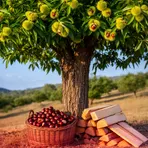
A tree that makes sweet, edible nuts and useful wood
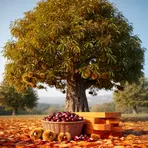
A large tree that loses its leaves and produces sweet edible nuts and useful wood

A large tree that has sweet edible nuts and gives shade
Surface Forms
Morphology
The core meaning comes directly from 'chestnut' which already denotes a reddish-brown colour, and 'sweet' simply modifies that noun without introducing an unpredictable idiomatic sense. A B1 learner who knows both words can readily infer this denotes a shade related to the chestnut nut/timber (a medium–dark reddish‑brown), a compositional pattern common across languages.
Etymology
The noun sweet chestnut comes from people eating and roasting the tree's tasty nuts. The name joins sweet, because the nuts taste good, and chestnut, meaning the nut and the tree, so the phrase now means the tree that gives edible nuts.

