

Simchat Torah


 1
8.4
1
8.4
- noun
- /sɪmˈkɑt ˈtɔrə/
- In Belgium, on Simchat Torah, Cardinal van Roey ordered the chimes of Antwerp Cathedral, to play the "Hatikvah".
Examples
-
On Simchat Torah, Jews celebrate the completion of the annual cycle of Torah readings with joyful dancing and singing.
-
On Simchat Torah, they danced with it as if it were a bride.
Blog text (33) -
Then Simchat Torah comes and goes for many older Jews without even a glimmer of recognition.
Blog text (25) -
While this is the end, there is no time to get sad, because in just a few days, on Simchat Torah, we will begin a new cycle, with Parashat Bereishit.
Blog text (31) -
While the street outside the Moscow synagogue drew crowds of ethnic celebrants at the holiday of Simchat Torah, actual observance in clandestine conditions attracted very few.
Academic text (1991) -
During Simchat Torah, the congregation gathers to honor the Torah scroll and begin the new cycle of readings.
-
Families come together for Simchat Torah, a holiday marked by festive meals and communal prayers as they reflect on the teachings of the Torah.
Synonyms

A Jewish festival celebrating the end of the yearly Torah readings
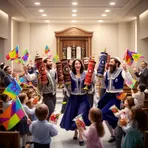
A Jewish festival celebrating finishing the yearly reading of the Torah
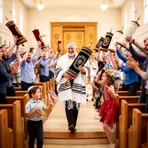
A Jewish holiday when people joyfully celebrate finishing the yearly reading of the Torah
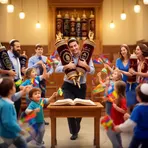
A Jewish holiday celebrating the end of the yearly reading of the Torah

A Jewish festival when people finish and immediately begin the yearly Torah readings, often with singing and dancing
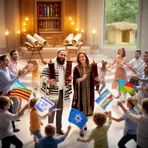
A Jewish holy day at the end of Sukkot when people celebrate finishing the yearly Torah readings

A Jewish holiday at the end of Sukkot when people celebrate finishing the yearly Torah readings
Surface Forms
Morphology
Simchat + Torah
If a learner knows 'Simchat' (rejoicing) and 'Torah' (the Jewish scriptures) they can infer this refers to a rejoicing/celebration connected to the Torah, so the basic sense is compositional. However, the term is a Hebrew borrowing and denotes a specific religious festival with cultural details (date, completion of the annual Torah-reading cycle) that are not predictable from the parts alone, so it is only partially transparent.
Etymology
Simchat Torah comes from Hebrew: Simchat means 'joy' and Torah means 'holy book'. On this day people dance and sing as they finish the yearly reading of the Torah and begin it again, so the name shows the joyful festival that celebrates the end and the new start of the readings.