
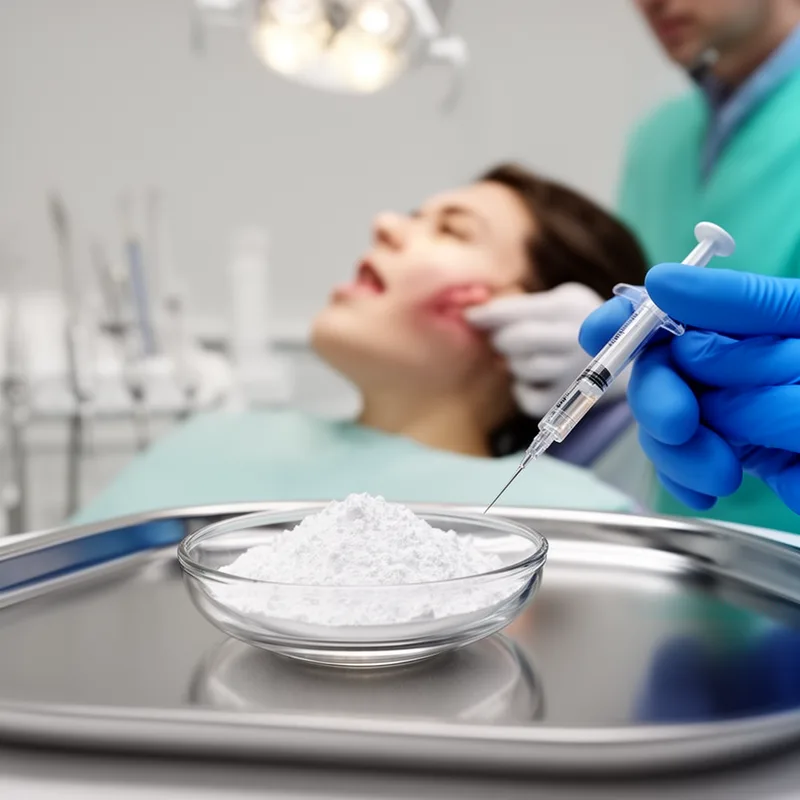
Ethocaine
- noun
- /ˈɛθoʊkeɪn/
- Specialized
- The dentist injected Ethocaine before starting the procedure to ensure the patient felt no pain.
Examples
-
Local anesthetics such as Ethocaine are commonly used in oral surgeries.
-
Some patients may be allergic to Ethocaine, requiring alternative medications.
-
The dentist used Ethocaine for the procedure.
-
Have you ever heard of Ethocaine?
-
The dentist injected Ethocaine into the patient's gums to numb the area before the extraction.
-
Before the surgery, the doctor explained that Ethocaine would be used to provide local anesthesia.
-
Local dentists often prefer Ethocaine due to its effectiveness and quick onset.
Synonyms

 1
7.9
1
7.9

A medicine used to make a small area numb for dental or medical work


 1
7.0
1
7.0
A medicine that numbs a small area to stop pain or itching

A white medicine injected to numb a small area before treatment
A medicine that makes a small part of the body lose feeling before a procedure

A white solid used to numb a small part of the body

A medicine used to make a small area numb on the inside of the mouth or other soft wet parts

A medicine used to numb a small area on the mouth or nose
Surface Forms
Morphology
Ethocaine = etho + caine
Ethocaine is a trade/chemical name built from scientific combining forms ('etho-' and '-caine') that are not familiar standalone English morphemes, so an average B1 learner cannot reliably derive its meaning from the parts.
Etymology
Ethocaine likely combines eth- (from 'ethyl', a small chemical part) with the ending -caine, the same ending you see in drugs like Novocaine that cause local numbness. So the name points to a medicine used to make a small area feel no pain.