
butacaine
- noun
- /ˈbjuːtəˌkeɪn/
- Specialized
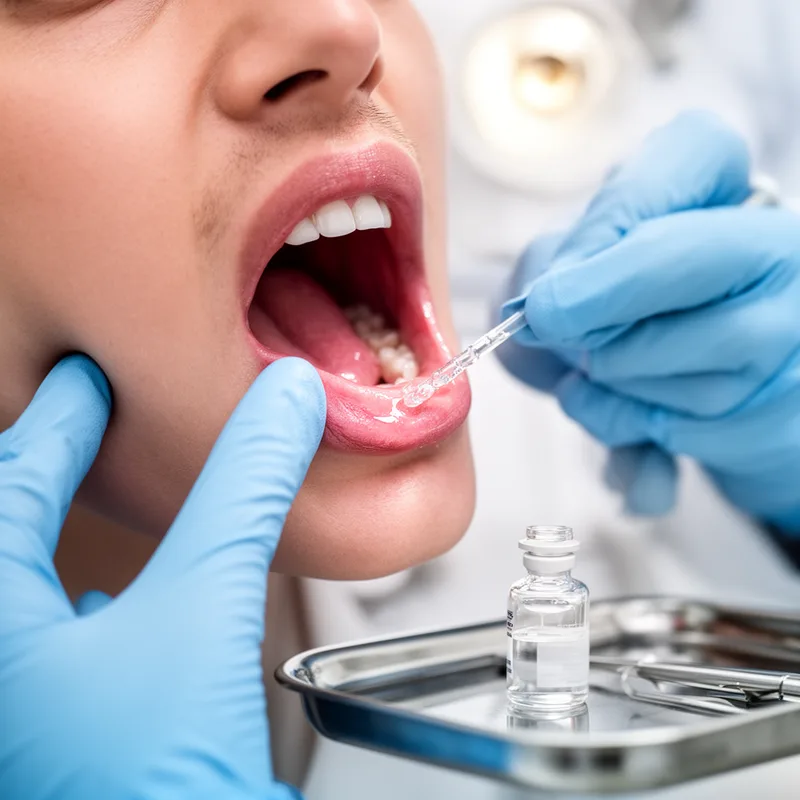
- The dentist used butacaine to numb the patient's gums before the procedure.
Examples
-
Researchers tested the effectiveness of butacaine on various types of mucous membranes.
-
Allergic reactions to butacaine are rare but possible in sensitive individuals.
-
The doctor recommended using butacaine for pain relief.
-
Many dentists use butacaine during procedures.
-
The dentist used butacaine to numb the patient's gums before the procedure.
-
Researchers tested the effectiveness of butacaine on various types of mucous membranes.
-
Many dentists use butacaine during procedures.
Synonyms

A medicine used to numb a small area on the mouth or nose
Compounds
Surface Forms
Morphology
butacaine = buta + caine
A specialised chemical name built from combining forms (buta- + -caine); these elements are not productive or semantically transparent to an average B1 learner.
Etymology
Butacaine comes from two parts: but-, a chemical label for a short, four-atom chain, and -caine, the same ending you see in local numbing drugs like cocaine. So the name points to a medicine used to 'numb' a small area, which matches its use as a local anesthetic.

