
tetracaine
- noun
- /ˈtɛtrəˌkeɪn/
- Specialized
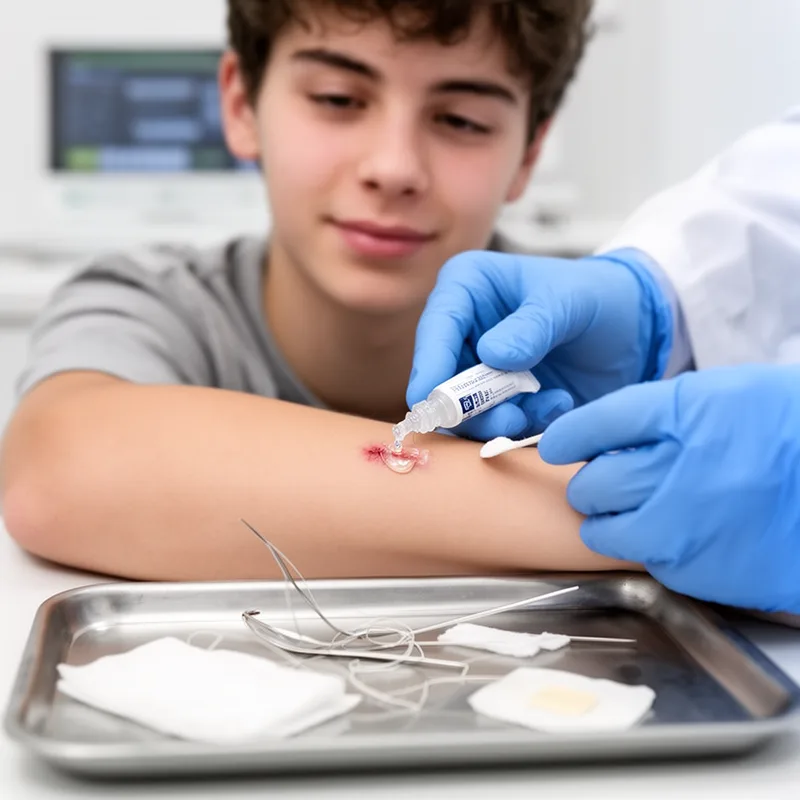
- Before the minor surgery, the doctor used tetracaine as a local anesthetic to minimize discomfort.
- topical tetracaine
- tetracaine and benzocaine
Examples
-
Lidocaine can be expected to provide 45 to 60 minutes of anesthesia, but benzocaine/tetracaine wears off after 20 to 30 minutes.
Academic text (2004) -
Tetracaine, 50 milligrams, please.
-
I anesthetize with tetracaine on a cotton pledget applied for 30 minutes.
Academic text (2006) -
Allergic reactions are uncommon with lidocaine, but they may be more prevalent with the esters such as tetracaine and benzocaine.
Academic text (2004) -
Administer topical 2% oxymetazoline/tetracaine spray to the nasal cavities.
Academic text (2004) -
Spray topical benzocaine/tetracaine onto the palate and posterior pharynx.
Academic text (2004) -
Benzonatate is closely related to the amide anesthetics such as tetracaine, and it rapidly induces profound anesthesia in the oropharynx.
Academic text (2004) -
Another method is to use drops of a fresh mixture of 180 mg of topical tetracaine base powder with 0.2 ml of isopropyl alcohol.
Academic text (1999) -
If a procedure in a patient who has been anesthetized with benzocaine/tetracaine should exceed 20 minutes, the patient may begin to gag when sensation to the palate and oropharynx returns.
Academic text (2004) -
The dentist applied tetracaine to ensure the patient felt no pain during the procedure.
How Numbing
- Specialized

- Specialized
- Specialized
 18
6.7
18
6.7

- Specialized

 1
7.0
1
7.0
Surface Forms
Morphology
tetracaine = caine (semi-transparent) = tetra + caine
The combining form '-caine' signals the class of local anesthetics, but the prefix 'tetra-' is chemically descriptive and not informative to most learners.
Etymology
The word tetracaine starts with tetra- meaning 'four' and ends with -caine, an ending taken from cocaine and used in the names of drugs that 'numb' the body, like procaine. So tetracaine is a kind of local anesthetic, a medicine that makes a small area feel numb.