
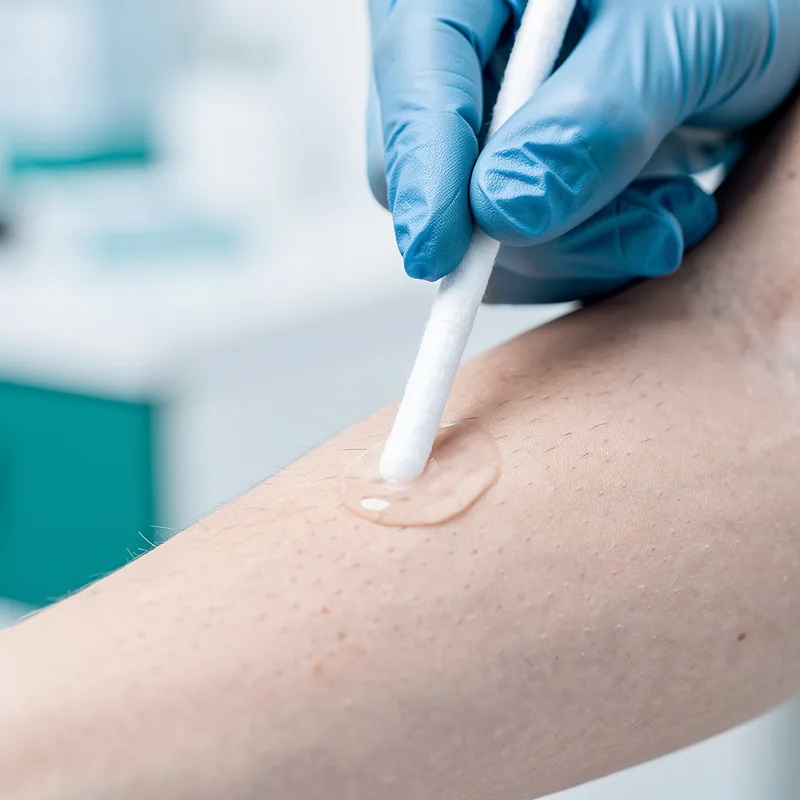
lidocaine
 18
6.7
18
6.7

- noun
- /ˈlaɪdəˌkeɪn/
- Specialized
- The recommended total dose of 4% lidocaine is typically 300 mg (or 7 to 8 ml).
- topical lidocaine
- lidocaine injection
- lidocaine spray
Loading YouTube…
Watch on YouTubeThat spray, if you spray your penis with the spray, which you do because that's what it's built to do, it has lidocaine in it.
- That spray, if you spray your penis with the spray, which you do because that's what it's built to do, it has lidocaine in it.
Examples
-
Local anesthesia was achieved by injecting 2% lidocaine and 1:100,000 epinephrine into the anterior and posterior pillars.
Academic text (2004) -
The right ear lobule was infiltrated with 1% lidocaine with 1:100,000 epinephrine.
Academic text (1996) -
In this article, we describe the response to IV lidocaine according to various individual parameters.
Academic text (2003) -
Get a suture kit and one percent lidocaine.
-
I called the doctor and she said that it's just an allergic reaction to the lidocaine in the saline solution.
-
Another option is to deliver the lidocaine via the working channel of a fiberoptic endoscope.
Academic text (2004) -
The area around the incision site is infiltrated with 1% lidocaine and 1:100,000 epinephrine.
Academic text (2004) -
The doctor applied lidocaine to numb the area before the surgery.
-
For minor skin procedures, the nurse often uses lidocaine to provide local anesthesia.
-
Before the dental work began, the dentist assured me that lidocaine would make the procedure painless.
Synonyms
 7
3.9
7
3.9
Medicine that makes a small body area lose feeling to stop pain during a medical procedure
 1
4.6
1
4.6
A medicine put on the skin or mouth to make one area numb
 1
7.0
1
7.0
A medicine that numbs the skin and the inside of the mouth


 1
7.0
1
7.0
A medicine that numbs a small area to stop pain or itching

A medicine that numbs a part of the body for surgery or medical procedures

A drug used to make part of the body not feel anything during surgery

A drug used to stop feeling in a small part of the body, often for procedures on the spine
How Numbing
- Specialized

- Specialized
- Specialized
18
6.7
- Specialized
1
7.0
Surface Forms
Etymology
Lidocaine comes from older names like lignocaine and xylocaine, and its ending -caine is the same as in cocaine, showing it belongs to a group of drugs that 'numb'. So lidocaine is a medicine used to 'numb' a small area to stop pain.