

wild licorice
- noun
- /waɪld ˈlɪkərɪʧ/
- I found wild licorice growing along the riverbank during my hike.
Examples
-
I love the taste of wild licorice.
-
Herbalists often use wild licorice as a natural remedy for coughs.
-
The root of wild licorice has been used in traditional Native American medicine.
-
Have you ever tried wild licorice tea?
-
The herbalist recommended using wild licorice to soothe a sore throat.
-
In traditional medicine, wild licorice is valued for its soothing properties.
-
Chefs often incorporate wild licorice in desserts to add a unique flavor.
Synonyms

 5
4.2
5
4.2

A plant with long sweet roots grown to make candies and medicine

A European wild plant like a pea that has yellowish flowers
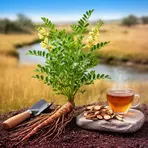
A North American plant in the pea family with a sweet root used like licorice
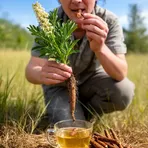
A North American plant with a sweet root that people chew or use to sweeten drinks

A plant with thick sweet roots used to make licorice

A group of plants, including licorice, that live for many years and have sweet roots

A plant with a sweet root that people use to add taste or make medicine
Surface Forms
Morphology
The meaning is directly compositional: 'wild' (growing naturally) modifies 'licorice' (the sweet-rooted plant), so a B1 learner who knows both words can infer 'licorice that grows in the wild'. This adjective+noun modifier pattern is a standard, cross-linguistically common construction and does not involve idiomatic or metaphorical shift.
Etymology
Wild licorice comes from people finding a plant in nature whose root tasted like licorice. Because the plant grew wild and had licorice-like roots, the name now means 'a wild plant with licorice-like roots used for flavoring or medicine'.