
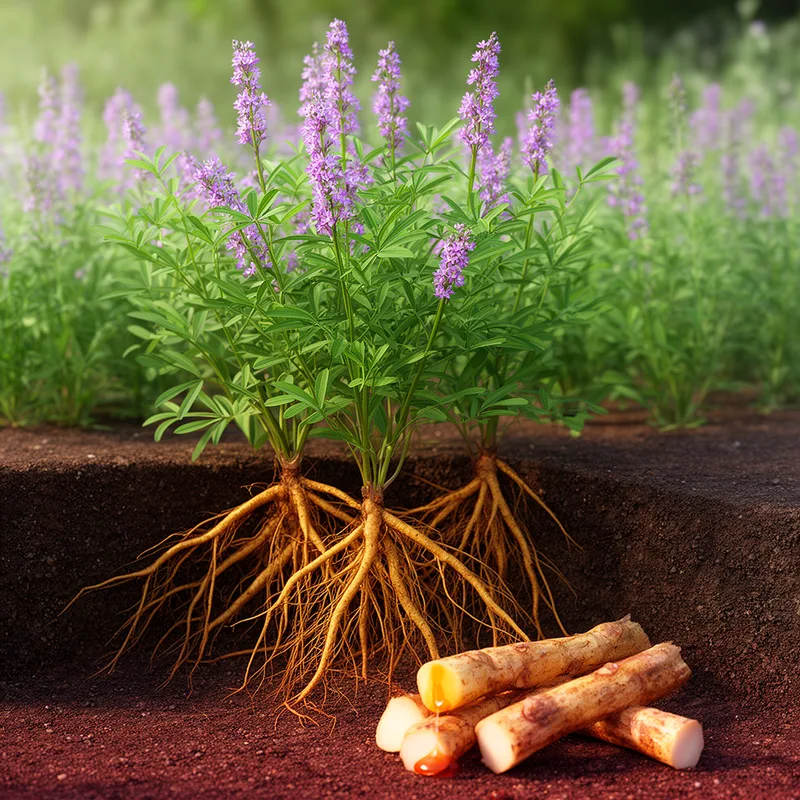
Glycyrrhiza
- noun
- /ˌɡlɪsɪˈraɪzə/
- Specialized
- Licorice, which comes from Glycyrrhiza glabra, is widely used as a flavoring and herbal remedy.
Examples
-
The Glycyrrhiza genus includes several species commonly used in traditional medicine.
-
The Glycyrrhiza plant is often used in herbal remedies.
-
Researchers studied the medicinal properties of Glycyrrhiza plants, particularly their anti-inflammatory effects.
-
Many people enjoy the sweet taste of Glycyrrhiza extract.
-
The roots of Glycyrrhiza species are often harvested for their sweet flavor and medicinal benefits.
-
Many herbalists recommend Glycyrrhiza for soothing digestive issues due to its anti-inflammatory properties.
-
In many cultures, Glycyrrhiza is a key ingredient in traditional remedies for coughs and colds.
Compounds
- Specialized
A North American plant in the pea family with a sweet root used like licorice

- Specialized
A fern from western North America with sweet underground stems that people chew
Surface Forms
Etymology
Glycyrrhiza comes from Greek words glykys 'sweet' and rhiza 'root', so it means 'sweet root'. That helps you remember these plants include licorice, whose root tastes sweet and is used for flavor and medicine.

